



- Article
Top UX Agencies Specializing in Fintech KYC Flow Solutions


Everything we know about marketplace UI/UX design says the same thing: reduce friction. Fewer steps. Fewer clicks. Fewer decisions.
Most of the time that’s right. But there’s one scenario where the opposite is true — and most product design teams miss it completely.
In 2011, researchers at Harvard discovered something counterintuitive. People who assembled IKEA furniture valued it 63% more than identical pre-assembled furniture. Not because it was better. Because they built it.
The effort created ownership. Ownership created attachment. Attachment created value that didn’t exist in the product itself.
This principle applies directly to marketplace platform development — and almost nobody uses it intentionally.
We noticed a pattern across multi-sided platform builds that process $720M+.
The platforms that asked users to do slightly more during onboarding had higher retention than the ones that optimized for speed.
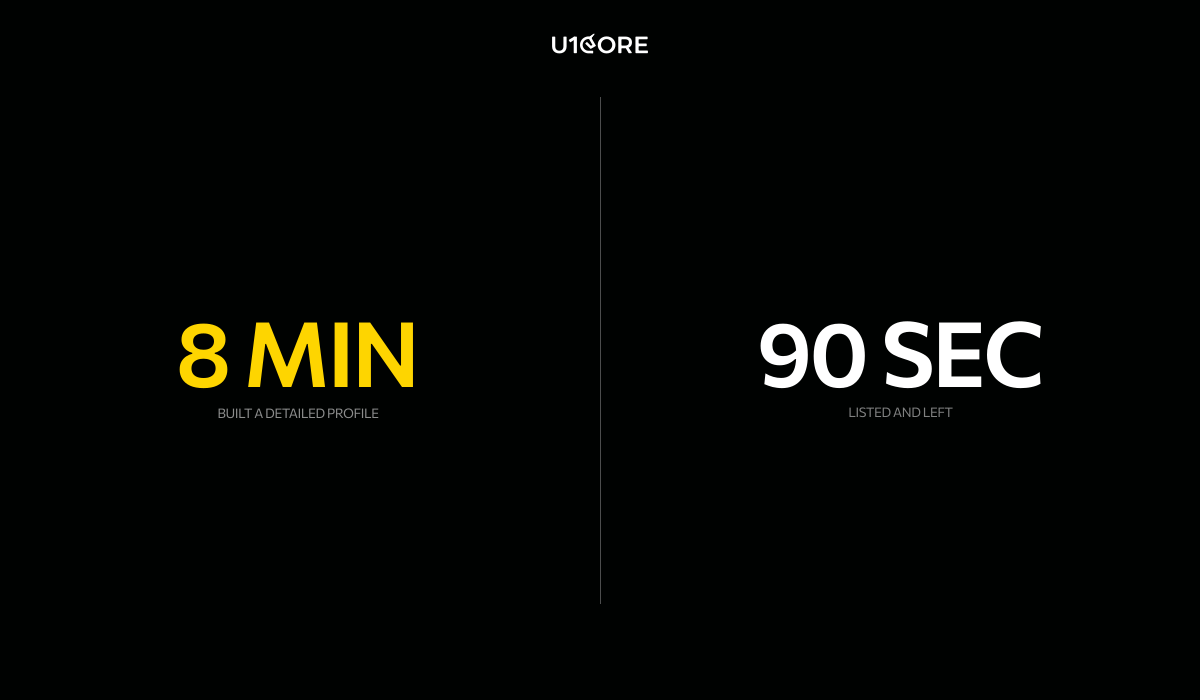
A seller who spends 8 minutes completing a detailed profile treats the platform differently than one who listed in 90 seconds. They respond faster. Stay longer. Churn less.
A buyer who sets preferences, saves favorites, and customizes search comes back more often than one who browsed anonymously. The UX architecture let them invest something. And people don’t abandon their investments easily.
Bad friction is any step that exists because nobody thought to remove it. A redundant form field. A confusing navigation path. A web design pattern that asks for information the platform already has.
Good friction is a moment where the user invests something meaningful — time, identity, preference, reputation — and gets back a sense of ownership.
Bad friction: “Enter your address, phone, company name, and tax ID before you can browse.”
Good friction: “Tell us what you’re looking for so we can show you better results.”
Same effort. Completely different emotional outcome in the user experience design.
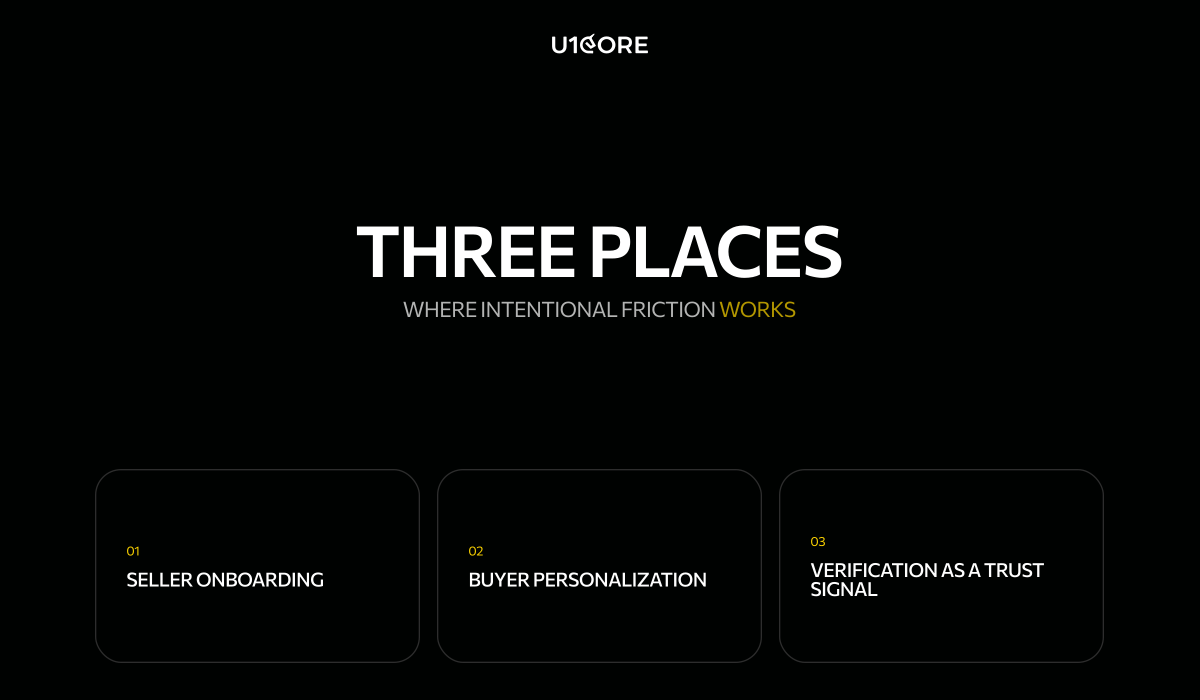
1. Seller onboarding
We tested two approaches on a marketplace web platform. Version A: list in 60 seconds, minimal fields. Version B: guided setup with profile photo, bio, and a short verification step.
Version A had more signups. Version B had more sellers who actually transacted. Their average time on platform was 4x longer.
The sellers who invested in their profile treated the platform like a business tool. The rest treated it like an experiment.
2. Buyer personalization
On a consumer marketplace we added a 3-step preference flow after signup. Every UX design best practice says this is friction.
Repeat visit rate went up 35%.
The platform felt personalized from session two. The user had invested their preferences — and the custom softwareremembered. That’s not friction. That’s a relationship.
3. Verification as a trust signal
Most platforms treat ID verification as a compliance checkbox. We designed verification as a trust UX moment in our app development process. After completing it, the user sees: “You’re now verified. Verified sellers get 3x more views.”
The effort becomes an investment with a visible return. The user earned status. And status is something people protect.
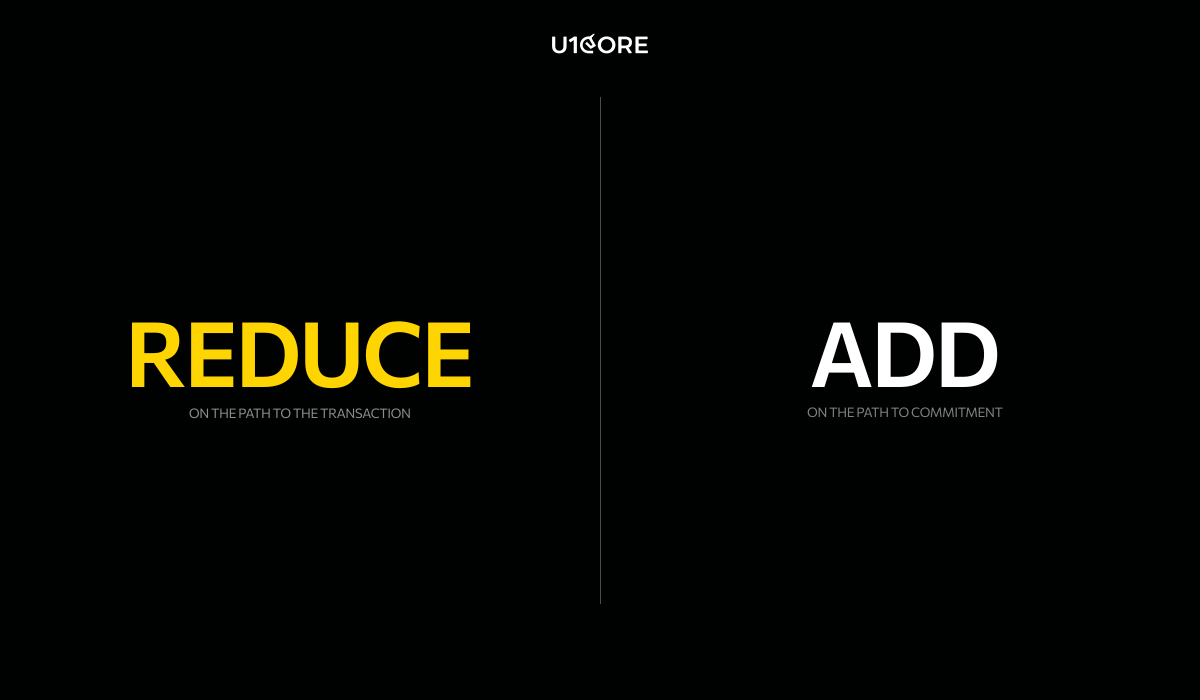
Reduce friction on the path to the transaction. Everything between “I want this” and “I bought this” should be fast. No unnecessary steps in the mobile design or web design.
Add friction on the path to commitment. The moments where a user goes from “I’m browsing” to “this is my platform” — that’s where intentional effort in marketplace UX design pays for itself.
Stop treating all friction as the enemy.
A seller who invested 10 minutes in their profile doesn’t leave for a competitor over a 2% commission difference. A buyer who saved 15 favorites doesn’t start over somewhere else.
That’s not lock-in. That’s ownership. And ownership is the cheapest retention strategy in marketplace design and development — because the user built it themselves.
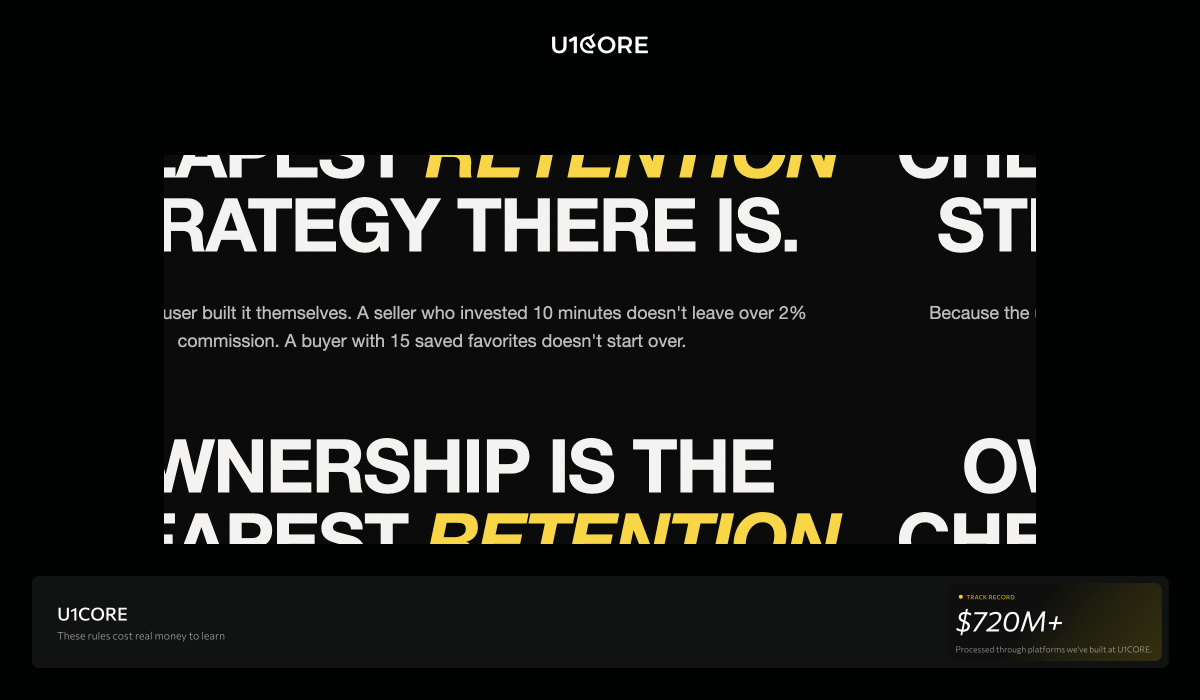
U1CORE is a product design and development studio specializing in marketplace platforms. We offer custom product UI/UX design, web design, mobile design, custom software development, app development, branding development, and product audit. $720M+ processed through products we’ve built.

Book an introduction call
During this call we do a quick intro and discuss your project and its specific needs.
Book an introduction call
During this call we do a quick intro and discuss your project and its specific needs.

Book a free consultation with us, so we will frame your product vision and strategy.

We’ve received your request and our team is already reviewing it. We’ll get back to you as soon as possible to discuss how we can help you achieve your goals.
Looking forward to collaborating with you!

We’ve sent the download link to your email. Check your inbox (and spam folder just in case) to access the eBook.
We hope you find it valuable for your Web3 journey. If you have any questions or feedback, feel free to reach out!

We want your Web3 website to be great even if you don't hire us.