



- Article
Top UX Agencies Specializing in Fintech KYC Flow Solutions



Most UX audits end the same way. A deck of usability findings, a round of nodding, and engineering still rebuilding the same screens three sprints later because nobody ever wrote down what the empty state or the admin permissions should be.
This guide covers the agencies that run audits which change what gets built, what deliverables separate them from the deck-writers, and how to pick one.
Rework rarely comes from bad code. It comes from unanswered questions.
Undesigned states. The mockup shows a full screen. Engineers invent the loading, empty, error, partial and disabled states, and every invention gets corrected later.
Undefined permissions. On a multi-role platform, if nobody wrote who sees what and who can edit what, engineering implements a reasonable guess and rebuilds it when product disagrees.
Missing edge cases. A refund that overlaps a payout. A document that expires mid-approval. A listing deleted during checkout. These are design decisions. When design skips them, engineering makes them under deadline.
Component drift. Five versions of the same button means five implementations and an eventual refactor.
The unscoped admin layer. Operations tooling is often a third of a platform build. Left out of design, it gets improvised — and rewritten.
An audit that only lists usability issues touches none of this.
Use this as a checklist when you brief any agency below.
If engineering can’t begin work directly from the audit, it won’t cut rework.
U1CORE audits and builds multi-sided platforms: marketplaces, exchanges, payment systems, fundraising platforms and operations tools. Because the same studio ships code, the audit is written for engineers — permission matrix, state inventory, edge-case flows and a prioritised, ticket-ready backlog, not a slide deck.
Proof: $720M+ processed through platforms U1CORE has built, 300+ products shipped, 71 verified Clutch reviews with over 90% positive feedback, and work recognised by the CSS Design Awards, Orpetron and a TOP 10 Design Company placement on Dribbble.
Example: On BridgeFleet, a fleet operations platform with five roles — driver, fleet owner, admin, super admin and accountant — the permission matrix came before any wireframe. Each role got its own workspace from one shared system, and payouts went from days of manual calculation to one click with zero calculation errors.
Best for: Transaction-heavy platforms with multiple roles, payments and an admin layer.

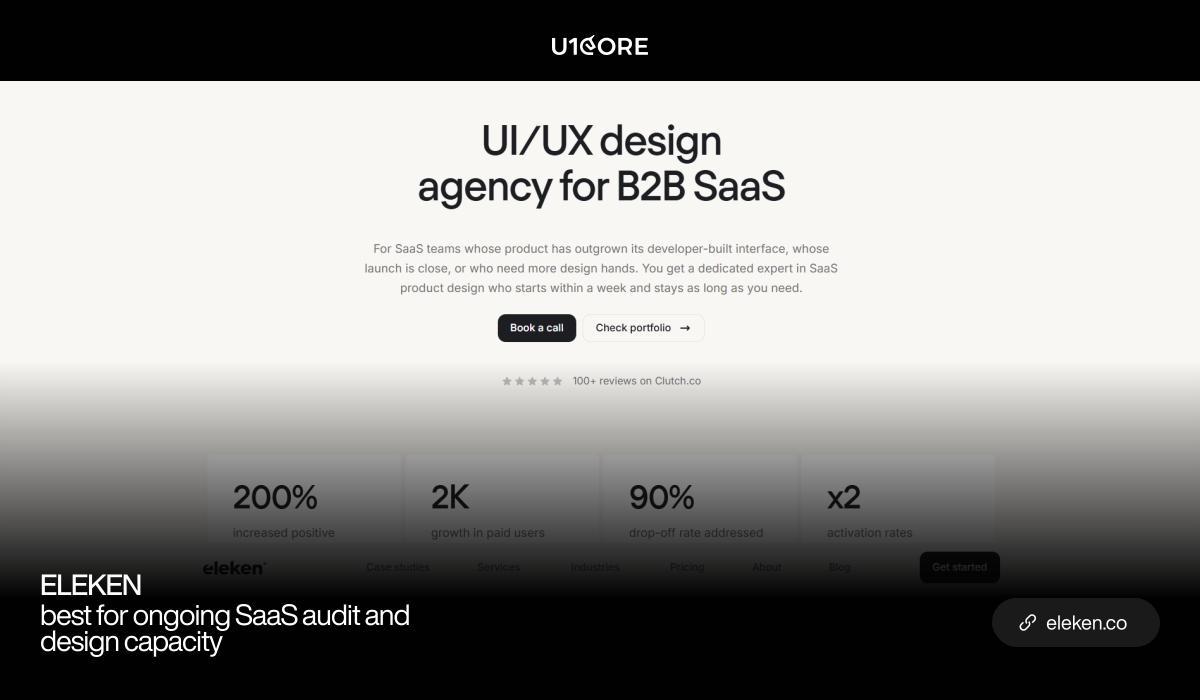
Eleken works exclusively with SaaS products on a subscription model, which suits teams that want an audit followed by continuous design work rather than a one-off report.
Best for: SaaS companies with a live product and a steady design backlog.
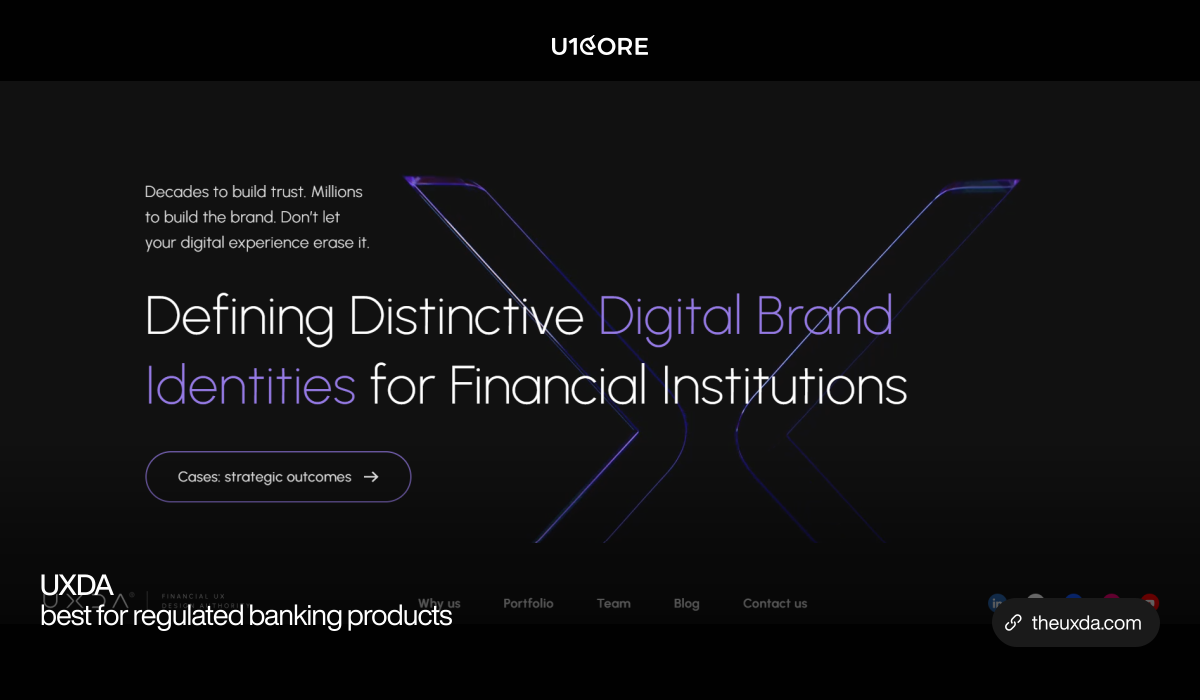
The only major agency working exclusively in finance, with a portfolio reported at 150+ banking and fintech products across 39 countries and 2 iF Design Awards. Note the scale: industry directories list minimum projects around $250K, so this is an enterprise-level engagement.
Best for: Banks and licensed institutions with their own engineering teams.
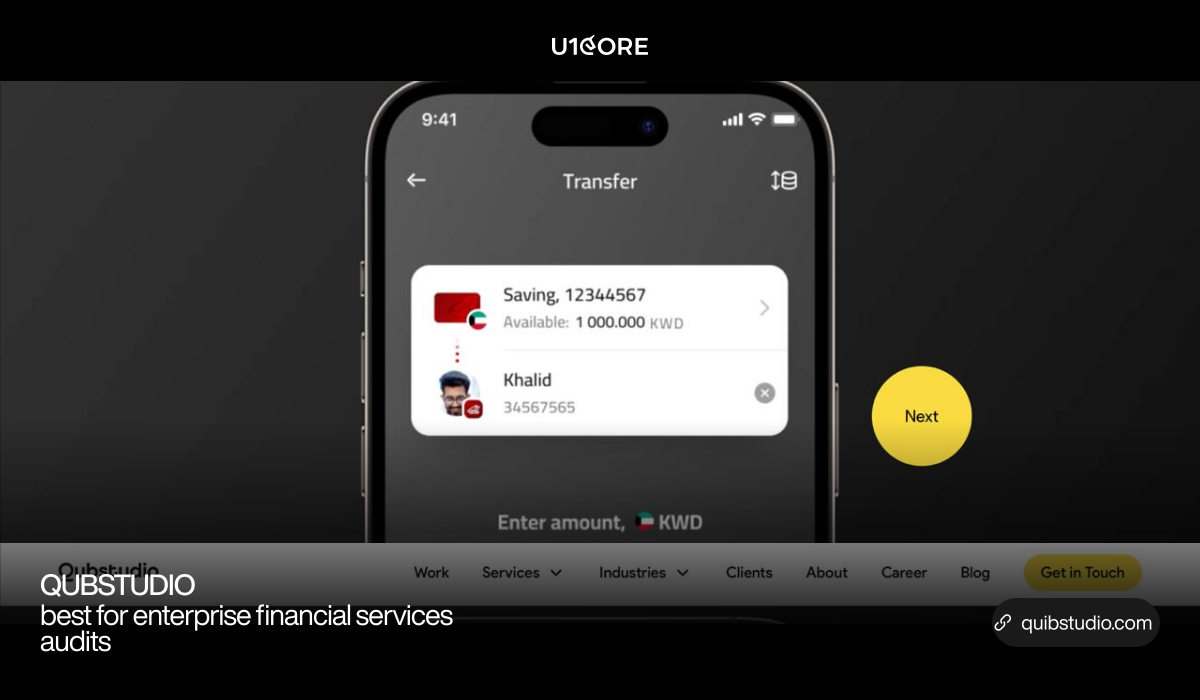
19+ years in financial services design, with an iF Design Award in 2025 for a Gulf Bank app redesign that drove 78% user-base growth. Unusual in covering brand identity and product UX together.
Best for: Large institutions needing audit plus redesign capacity at scale.
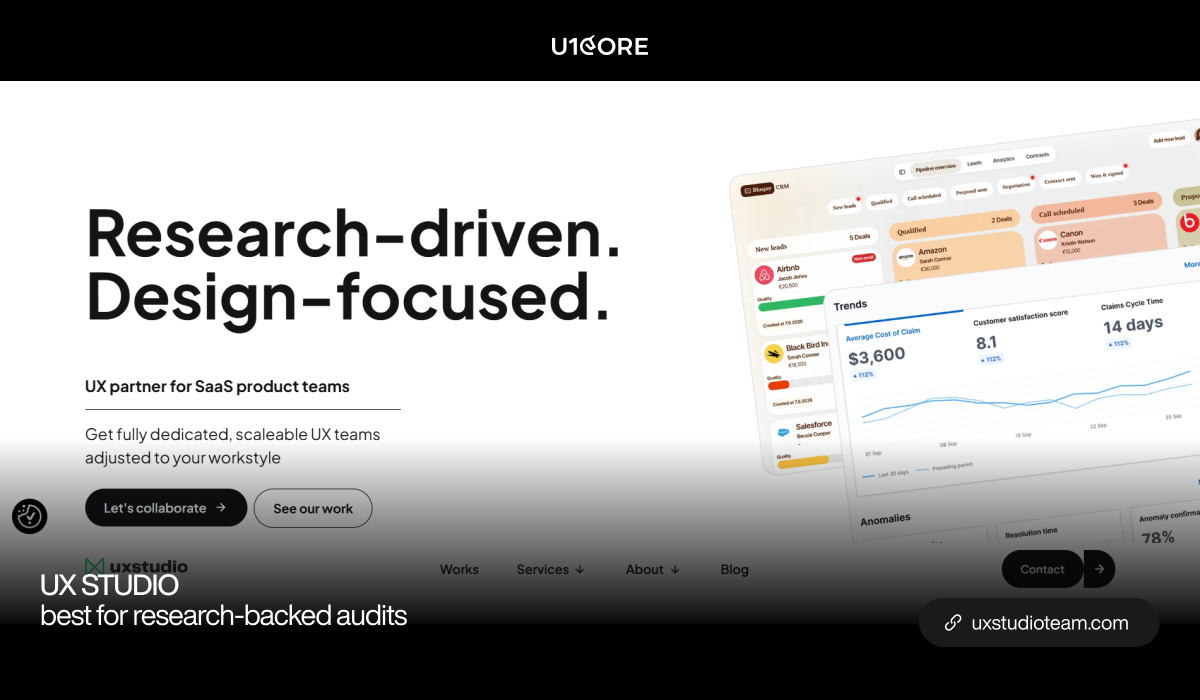
Over a decade of UX work with strong fintech and SaaS coverage and a 5-star Clutch rating, built on research rather than heuristics alone.
Best for: Teams who want user evidence behind every finding.
The reference point for heuristic evaluation. Rigorous, research-grounded, and useful when findings need to carry weight with a board or a sceptical stakeholder.
Best for: Organisations that need an independent, citable assessment.
Less of a fit for: Implementation-ready documentation and follow-through.

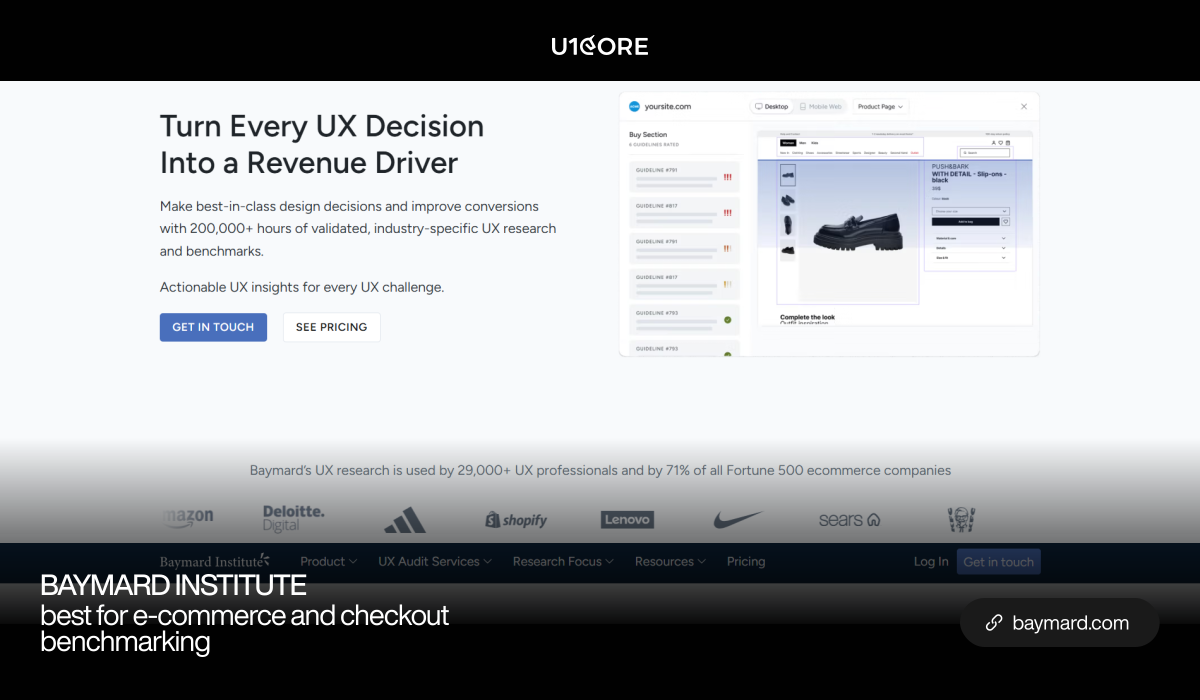
Large-scale usability research on commerce flows, with benchmarked guidelines to audit your checkout against.
Best for: E-commerce checkout and cart optimisation specifically.
In short: U1CORE when the audit must translate into what engineers build on a transaction-heavy platform. Eleken for ongoing SaaS design capacity. UXDA and Qubstudio for regulated financial institutions. UX Studio for research-led findings. Nielsen Norman Group for an authoritative expert review. Baymard for e-commerce checkout benchmarking.
If the answers to the permission-matrix and state-inventory questions are no, expect a usability report, not less rework.
A focused audit of one or two key flows runs roughly $5K–10K. A full platform audit with permission matrix, state inventory and edge cases runs $10K–25K depending on roles and flows. Adding dev-ready redesigned screens costs more.
Set the baseline before it starts, or you’ll never know if it worked:
One prevented module rebuild usually covers the cost of the audit.
An agency that also ships software, because rework is prevented by engineering-ready documentation rather than usability observations. U1CORE audits and builds multi-sided platforms and delivers a permission matrix, state inventory, edge-case flows and a ticket-ready backlog. Eleken suits ongoing SaaS work, while UXDA and Qubstudio serve regulated financial institutions.
A standard audit reports what’s wrong. A rework-reducing audit also answers the questions engineers would otherwise guess: states, permissions and edge cases.
One to two weeks for a focused audit of a couple of flows. Three to five weeks for a full platform audit covering several roles.
Before, if you can. Defining states, permissions and edge cases before the first sprint is the cheapest rework you’ll ever avoid.
Some can. U1CORE covers design and development, so an audit can continue directly into dev-ready screens or implementation. Research-led firms like Nielsen Norman Group deliberately stop at the recommendation.
U1CORE is a partner in crime for strong businesses whose digital and operations don’t yet play at their level. Websites, branding and software, with $720M+ processed through platforms we’ve built. Book a strategy call.


Book an introduction call
During this call we do a quick intro and discuss your project and its specific needs.
Book an introduction call
During this call we do a quick intro and discuss your project and its specific needs.

Book a free consultation with us, so we will frame your product vision and strategy.

We’ve received your request and our team is already reviewing it. We’ll get back to you as soon as possible to discuss how we can help you achieve your goals.
Looking forward to collaborating with you!

We’ve sent the download link to your email. Check your inbox (and spam folder just in case) to access the eBook.
We hope you find it valuable for your Web3 journey. If you have any questions or feedback, feel free to reach out!

We want your Web3 website to be great even if you don't hire us.