


Your SaaS product sells in five countries, but German labels break buttons, Arabic flips nothing, and dates still read American in the UK.
This guide covers UI/UX agencies that design SaaS products for international and multilingual users. At U1CORE, we design for localisation from the first wireframe as part of our UI/UX Product Design for SaaS work — so we’ll also show how we approach it.
Why multilingual SaaS UX breaks down
Localisation is treated as translation. Teams send strings to a translator after design is done. Layouts, formats and flows were never designed to change.
The design system assumes English. Fixed-width buttons, tight table columns and truncated labels only work for short English words.
Markets differ in more than language. Payment methods, address formats, legal text and trust signals change by country. A translated interface can still feel foreign.
Typical failure points we see:
- Broken layouts. German and Finnish strings run 30–40% longer and overflow buttons, tabs and table headers.
- No right-to-left support. Arabic and Hebrew users get mirrored text inside a left-to-right layout.
- Hard-coded formats. Dates, currencies, numbers and units do not follow the user’s locale.
- Untranslatable UI. Text baked into images, icons that carry cultural meaning, and strings joined in code.
- One onboarding for every market. Sign-up, payment and verification steps ignore local expectations.
What a multilingual SaaS design agency actually fixes
It designs flexible layouts. Components are built to grow with longer strings and to mirror for right-to-left languages.
It builds locale rules into the design system. Dates, numbers, currencies, names and addresses follow one documented set of rules per locale.
It plans content with engineers. Agencies define string keys, plural rules and variables together with developers so translation does not break the interface.
It adapts flows by market. Payment, address and identity steps change where local practice demands it.
It tests with real users per market. Usability tests in the target language catch tone and trust problems that a translator cannot.
How to choose an agency for multilingual SaaS
Ask to see a product live in several languages. Screenshots of the English version prove nothing about localisation.
Ask how their design system handles text expansion and RTL. They should show components tested with long strings and mirrored layouts.
Check that design and development sit together. Internationalisation is code: string management, locale formatting and layout direction. Design-only agencies leave this to your team.
Ask how they research new markets. Look for in-market interviews or testing, not only desk research.
Top 7 agencies for multilingual SaaS design
1. U1CORE
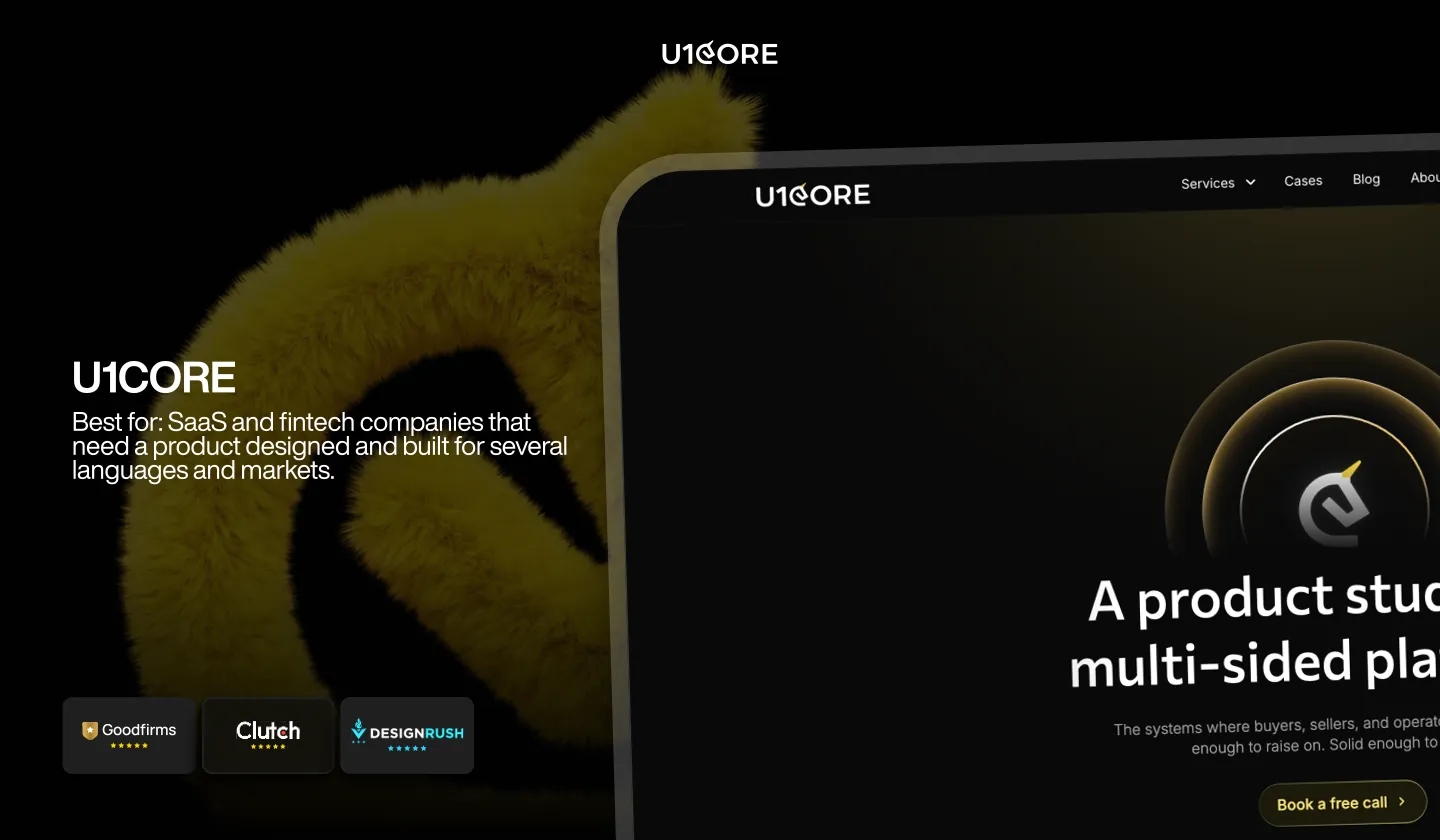
Best for: SaaS and fintech companies that need a product designed and built for several languages and markets.
U1CORE is one team for product strategy, UX/UI design and development, with 350+ projects delivered for 80+ clients across six continents and 31 of them in SaaS. For FinAware, we designed the dashboard for suspicious-transaction detection software used by US banks; it is multilingual, integrates with Excel, and agents learn it in under 30 minutes. U1CORE holds a 5.0 rating on Clutch from 52 reviews.
What U1CORE does on multilingual SaaS projects:
- Market and locale research — what changes by country in language, formats, payments and trust.
- Flexible design system — components tested for text expansion and right-to-left layouts.
- Locale rules — dates, currencies, numbers and addresses documented per market.
- Localised flows — sign-up, payment and verification adapted where markets differ.
- Content structure — string keys, plurals and variables planned with engineers.
- Development — internationalisation built into the front end, not added later.
Why teams choose U1CORE: a fixed quote and timeline within 24 hours of a brief, and the team that designs for localisation builds it.
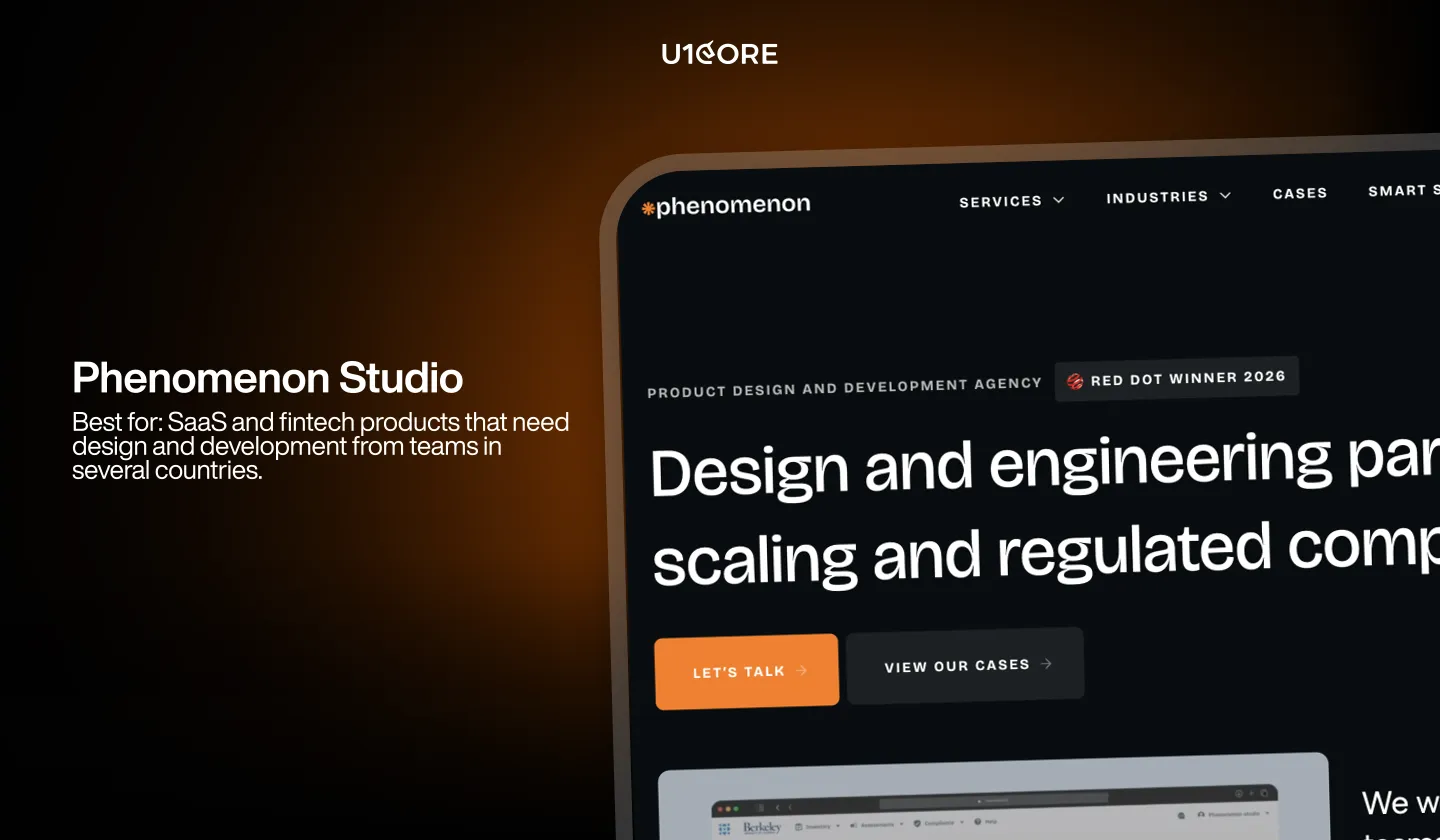
2. Phenomenon Studio
Best for: SaaS and fintech products that need design and development from teams in several countries.
Tallinn, Lugano and Delaware studio providing design plus web, mobile and AI development (Clutch 5.0, 54 reviews).
3. Netguru
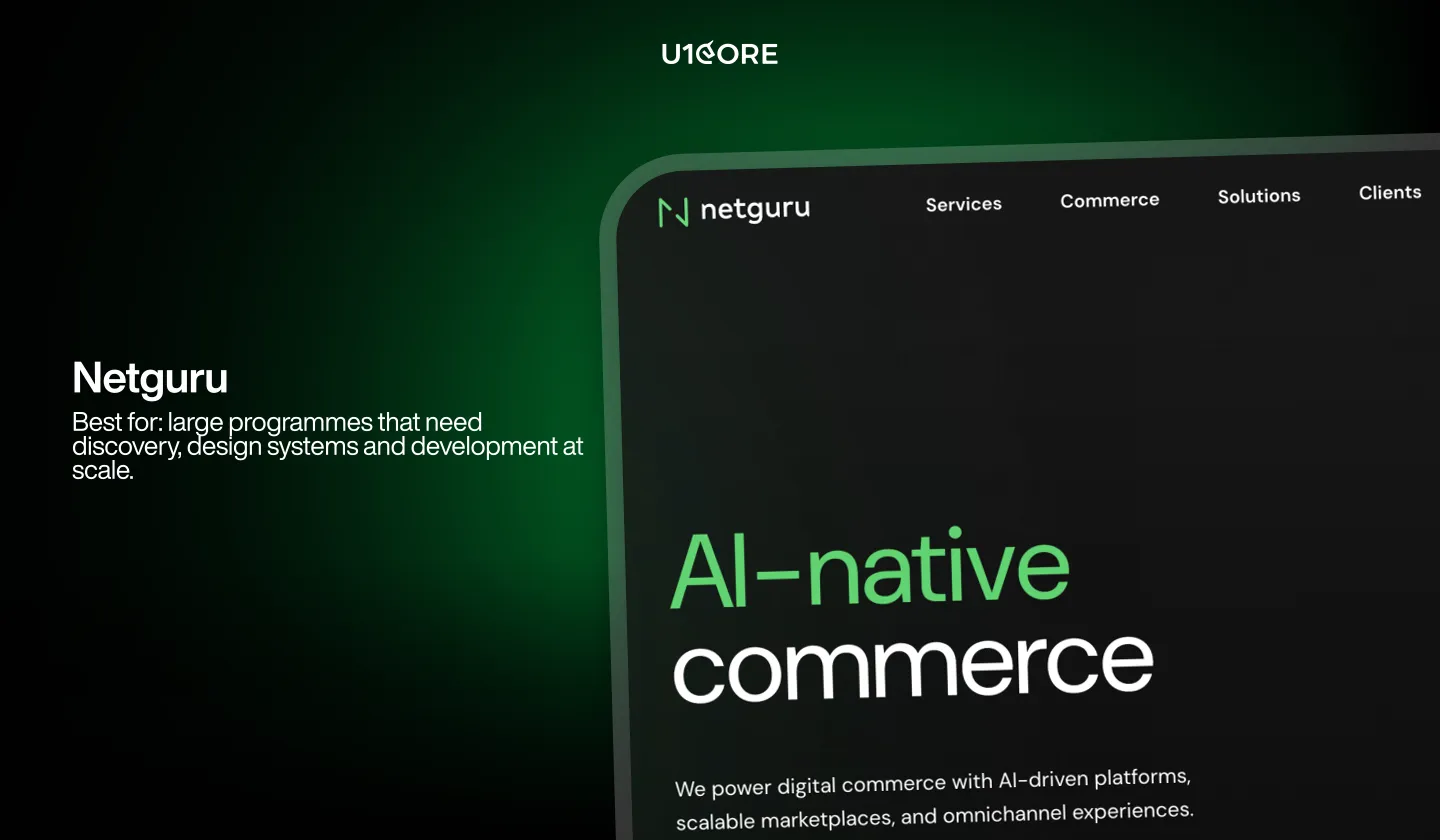
Best for: large programmes that need discovery, design systems and development at scale.
Poznań company offering discovery, rapid prototyping, design systems and development, including the Silk Design System (Clutch 4.8, 73 reviews).
4. Cieden
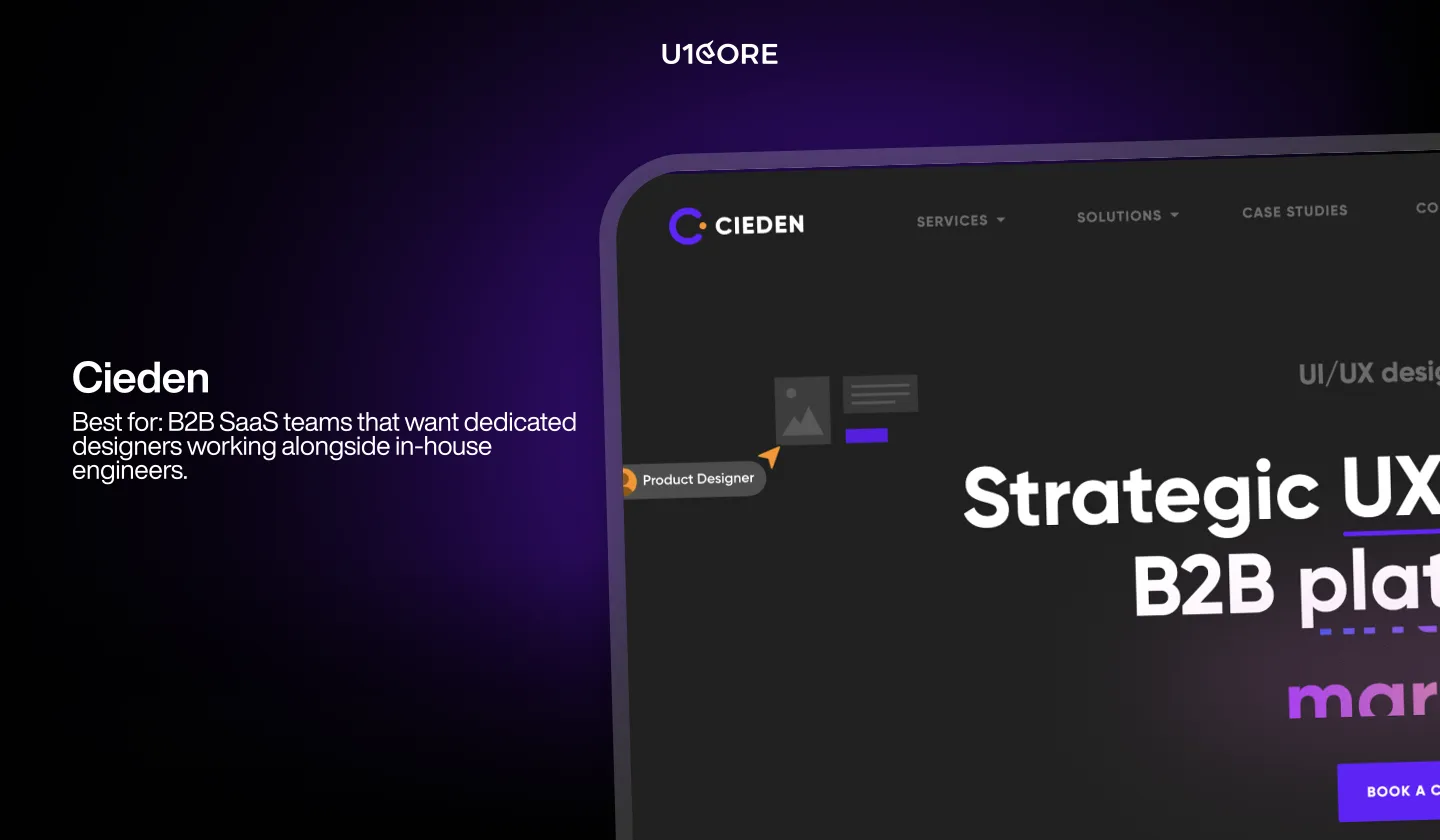
Best for: B2B SaaS teams that want dedicated designers working alongside in-house engineers.
Toronto and Lviv agency providing dedicated product-design teams for B2B SaaS and enterprise (Clutch 4.9, 46 reviews).
5. Eleken
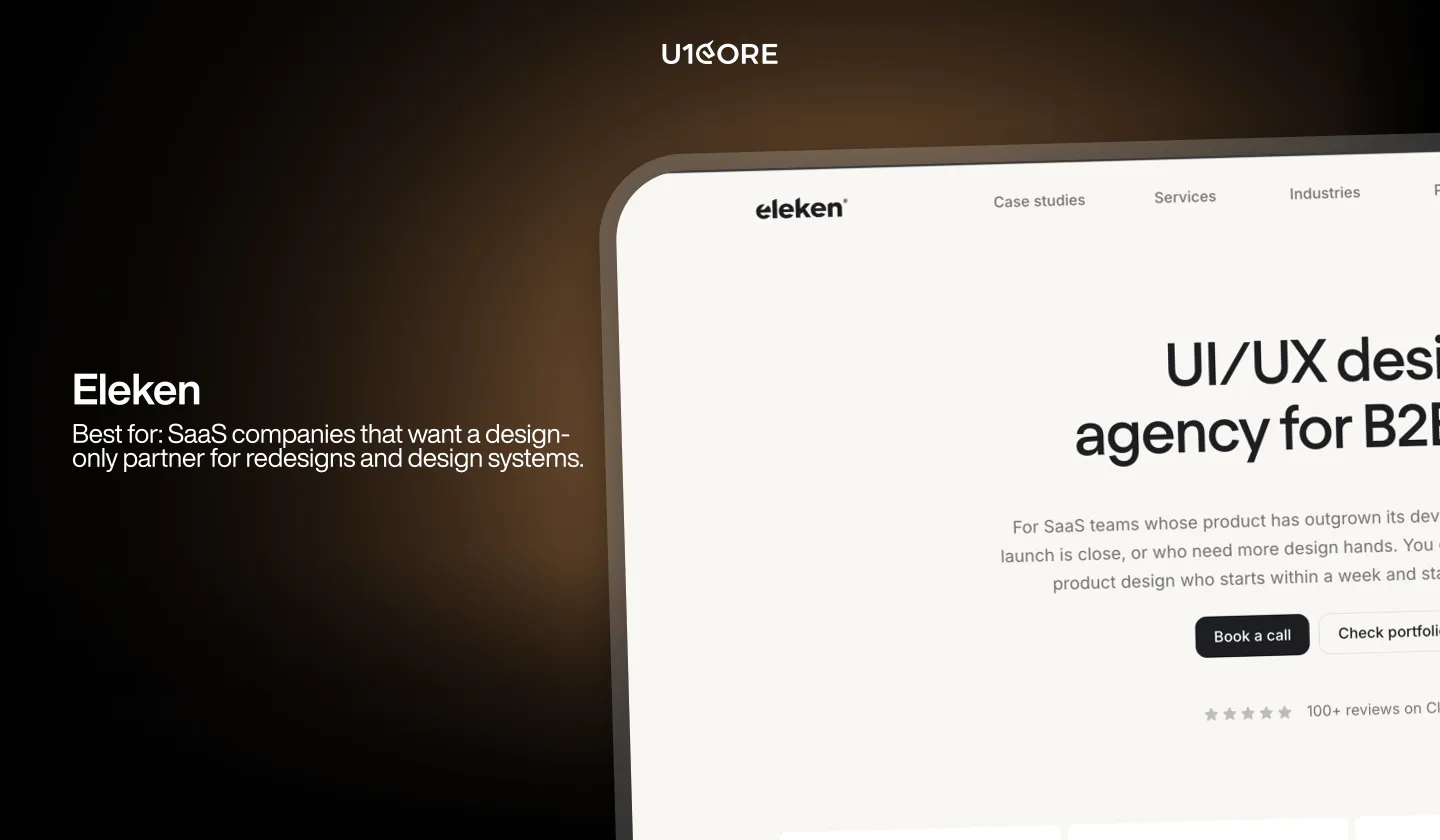
Best for: SaaS companies that want a design-only partner for redesigns and design systems.
SaaS-only design agency offering redesigns, UX audits, design systems and embedded designers.
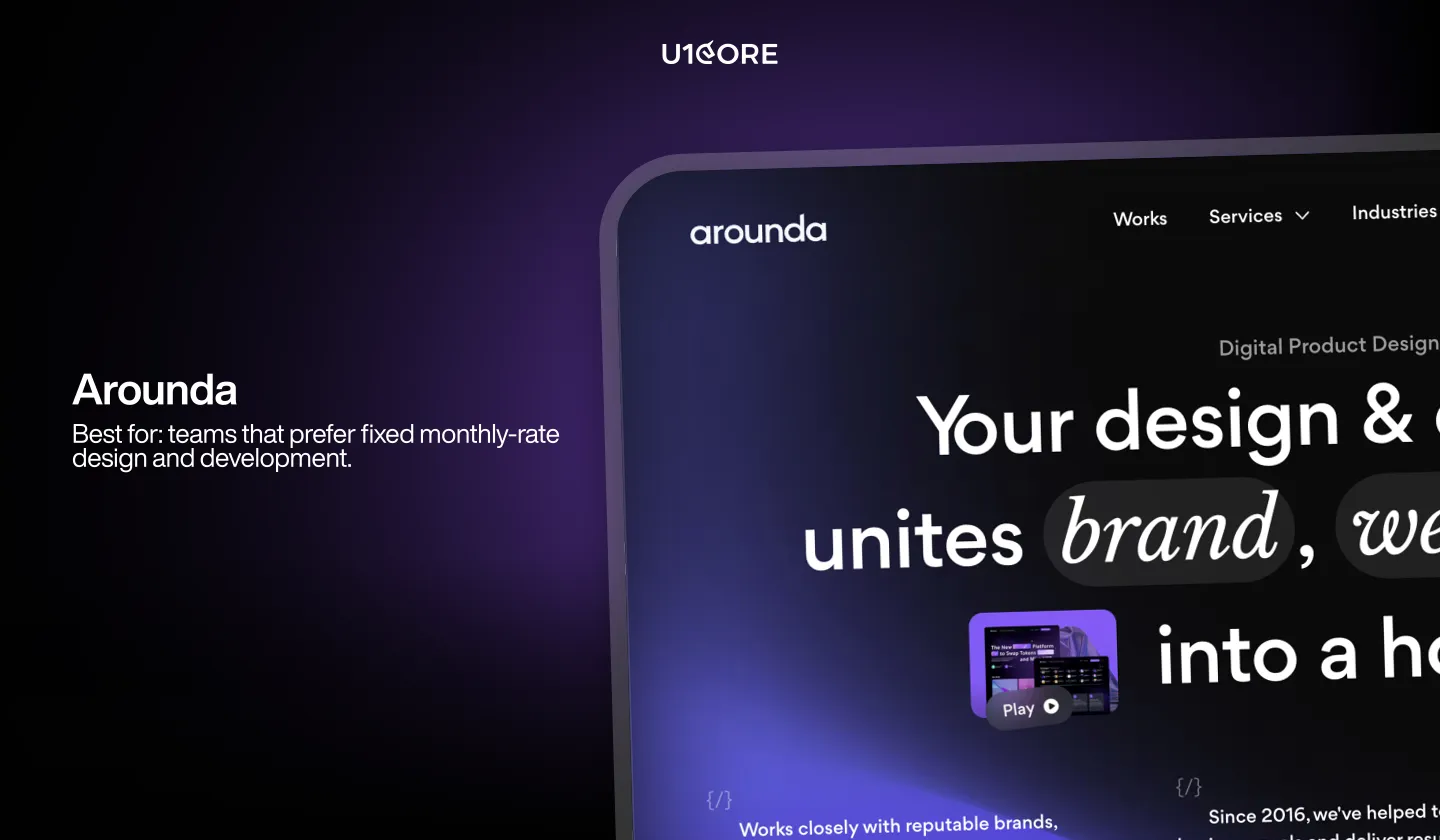
6. Arounda
Best for: teams that prefer fixed monthly-rate design and development.
Odesa and Tallinn agency doing product design and development for fintech, SaaS and Web3 (Clutch 5.0, 87 reviews).
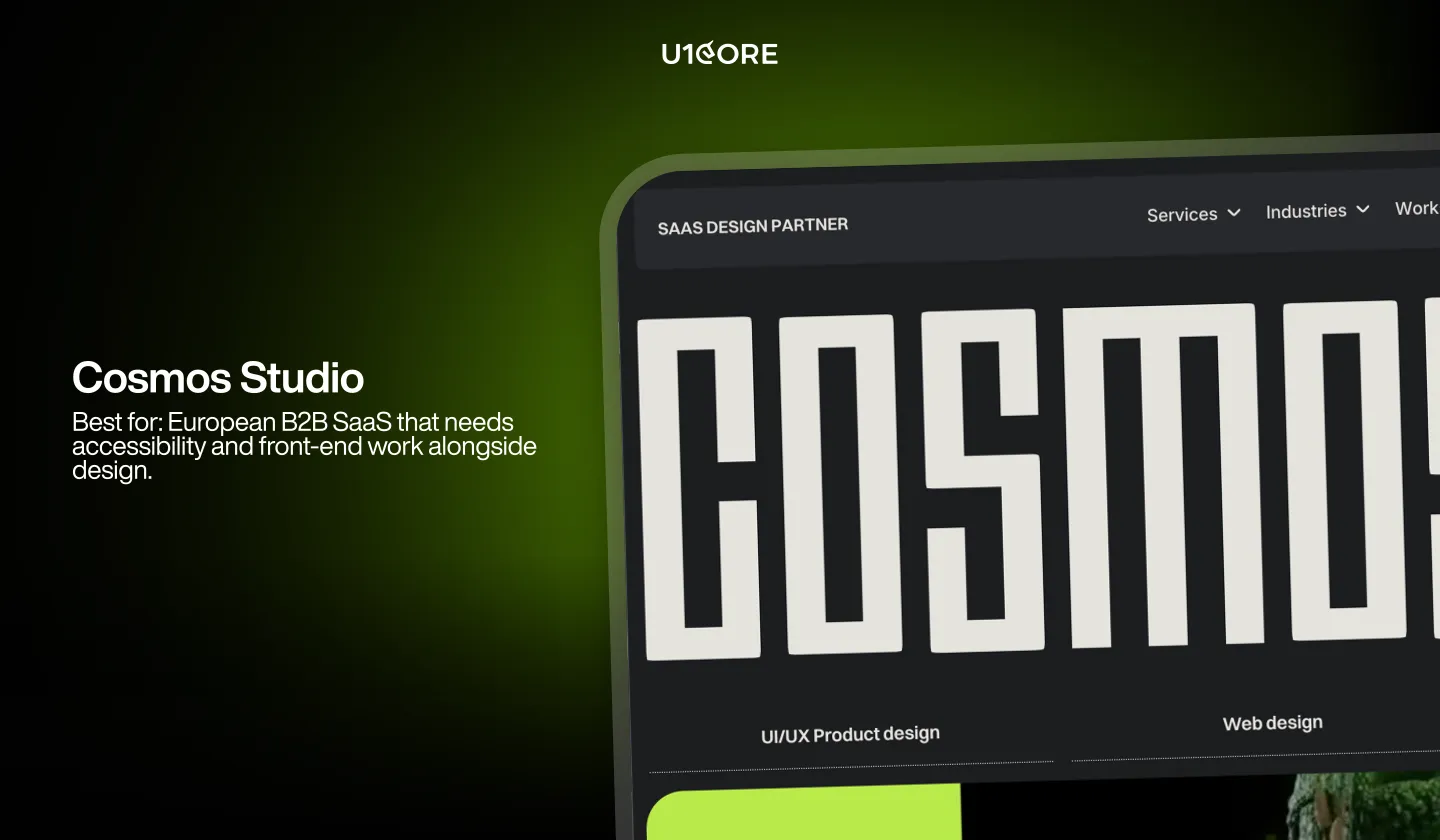
7. Cosmos Studio
Best for: European B2B SaaS that needs accessibility and front-end work alongside design.
Kyiv-based team offering UX audits, B2B SaaS design, React/Next.js front-end and accessibility redesigns to WCAG 2.1 AA (Clutch 5.0, 21 reviews).
Agency comparison at a glance
U1CORE — market research, localised design system and development in one team. Best fit for SaaS and fintech companies entering several markets.
Phenomenon Studio — design plus development across offices. Best fit for SaaS and fintech products in growth.
Netguru — discovery, design systems and engineering at scale. Best fit for large programmes.
Cieden — dedicated design teams. Best fit for B2B SaaS with strong in-house engineering.
Eleken — SaaS-only design. Best fit for teams that handle internationalisation in code themselves.
Arounda — monthly-rate design and development. Best fit for teams that want predictable cost.
Cosmos Studio — UX audits, accessibility and front-end. Best fit for European B2B products.
How U1CORE approaches multilingual SaaS design
1. Market audit (1–2 weeks). We review your product in each target locale and list what breaks: layouts, formats, flows and content.
2. Locale rules and content structure (1–2 weeks). We document formats per market and plan string keys, plurals and variables with your engineers.
3. Design system update (2–4 weeks). We rebuild components for text expansion and right-to-left layouts and test them with real translations.
4. Localised flows and build (4–10 weeks). We adapt onboarding, payment and verification by market and implement internationalisation in the front end.
5. In-market testing (ongoing). We test with users in each language and refine copy, layout and flows.
Does your product feel native only in English? U1CORE is the partner in crime for strong businesses whose digital and operations don’t yet play at their level. We’ll design and build a product that works in every market you sell to. Book a strategy call or explore our UI/UX Product Design for SaaS services.