


Logistics brands were designed for trucks and invoices, yet customers now meet them through portals, tracking pages and driver apps that look like three different companies.
This guide covers what a logistics identity must do and who to shortlist. At U1CORE, we build identities across vehicles, documents and software as part of our Branding Development service — so we’ll also show how we approach it.
Why logistics brands break down between physical and digital
The brand was built for the fleet, not the platform. Many transport companies have a logo that works on a trailer and a letterhead. It was never tested on an app icon or a dark-mode driver screen.
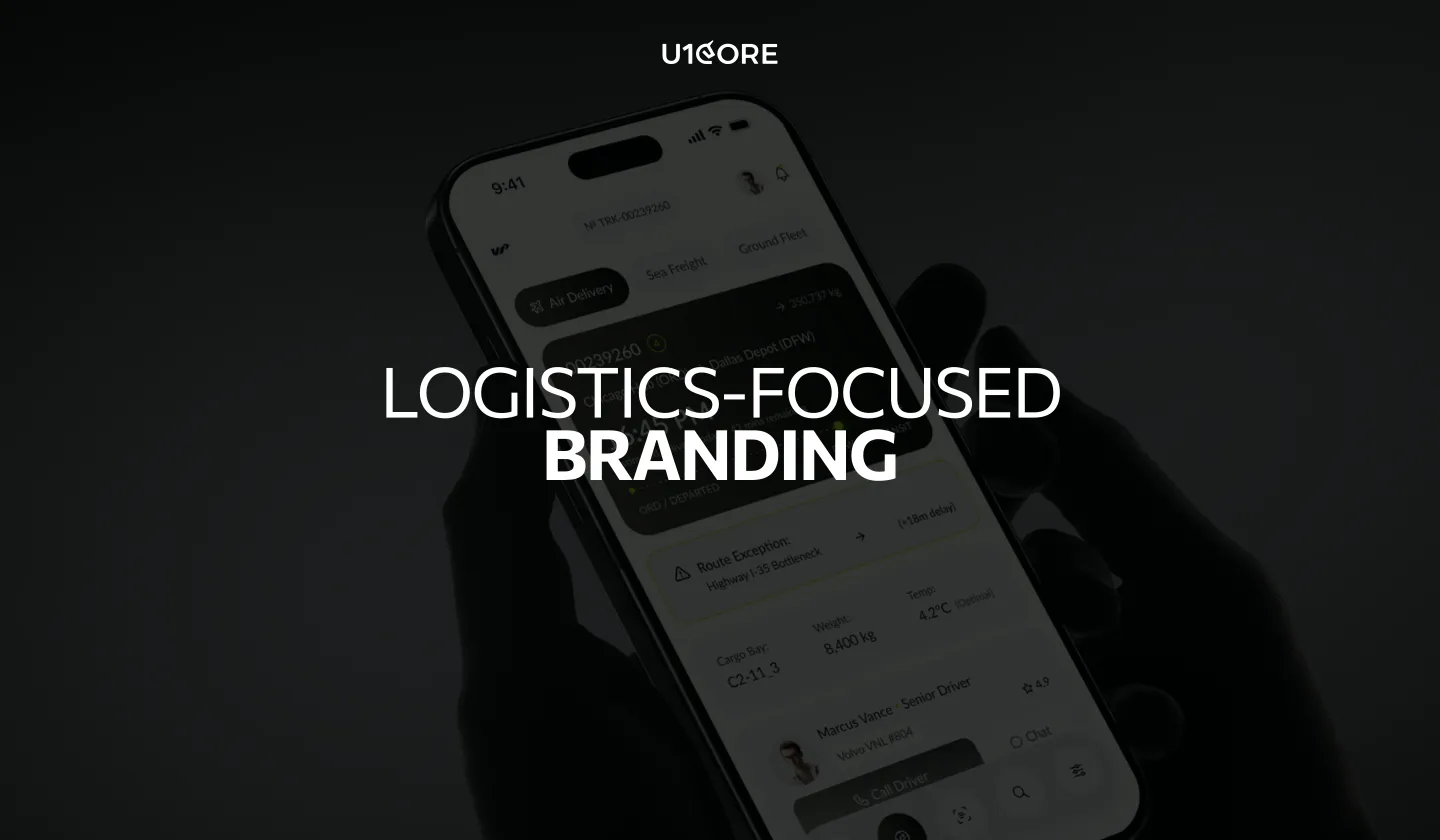
Customers judge reliability through software. A shipper rarely sees your warehouse. They see the quote form, the shipment timeline and the delay notification. If those feel improvised, so does the company.
Drivers and partners are an audience too. Recruitment pages, onboarding flows and the daily driver app shape whether good drivers stay. An identity that only speaks to buyers misses half the people who carry it.
Typical failure points we see:
- Logo that collapses at small sizes — fine on a truck, unreadable as an app icon or favicon.
- No colour logic for status — brand colours clash with the reds, ambers and greens that tracking and alerts depend on.
- Separate visual languages — the website, portal and driver app were each designed by a different vendor.
- Documents nobody owns — waybills, invoices and proof-of-delivery templates carry an outdated version of the brand.
- No rules for data-heavy screens — the brand book covers brochures but says nothing about tables, maps or dashboards.
What a logistics-focused branding agency actually fixes
A mark that scales from trailer to tab bar. The agency designs the logo and symbol for the hardest contexts first: vehicle livery seen at distance, and app icons seen at a few millimetres.
A colour system that respects operational meaning. Brand colours are chosen so they never compete with status colours. Delivered, delayed and failed must read instantly, in sunlight, on a cheap phone.
Typography for numbers and codes. Logistics interfaces are full of tracking IDs, ETAs, weights and addresses. A good identity picks typefaces that keep digits clear and tables scannable.
A product layer in the brand system. Beyond the logo, the agency delivers UI components, icon sets, map styling and notification patterns, so the portal and the driver app feel like the same company as the truck.
Templates for the paperwork. Invoices, delivery notes, rate cards and onboarding packs get the same care as the website, because they reach customers every day.
How to choose an agency for logistics branding
Look for work that crosses physical and digital. Ask to see one identity applied to both a vehicle or printed piece and a working software interface.
Check whether they can design and build the product. If the agency can only hand over a brand book, your developers will interpret it alone. A team that also designs and develops portals and apps keeps the identity intact in production.
Ask about operational users. Dispatchers, drivers and finance teams use your software for hours. The agency should talk about their tasks, not only about brand perception.
Expect a system, not a moodboard. The deliverable should include usage rules, component specs and files your team can extend without calling the agency for every new screen.
Top 7 branding agencies for B2B logistics and transport companies
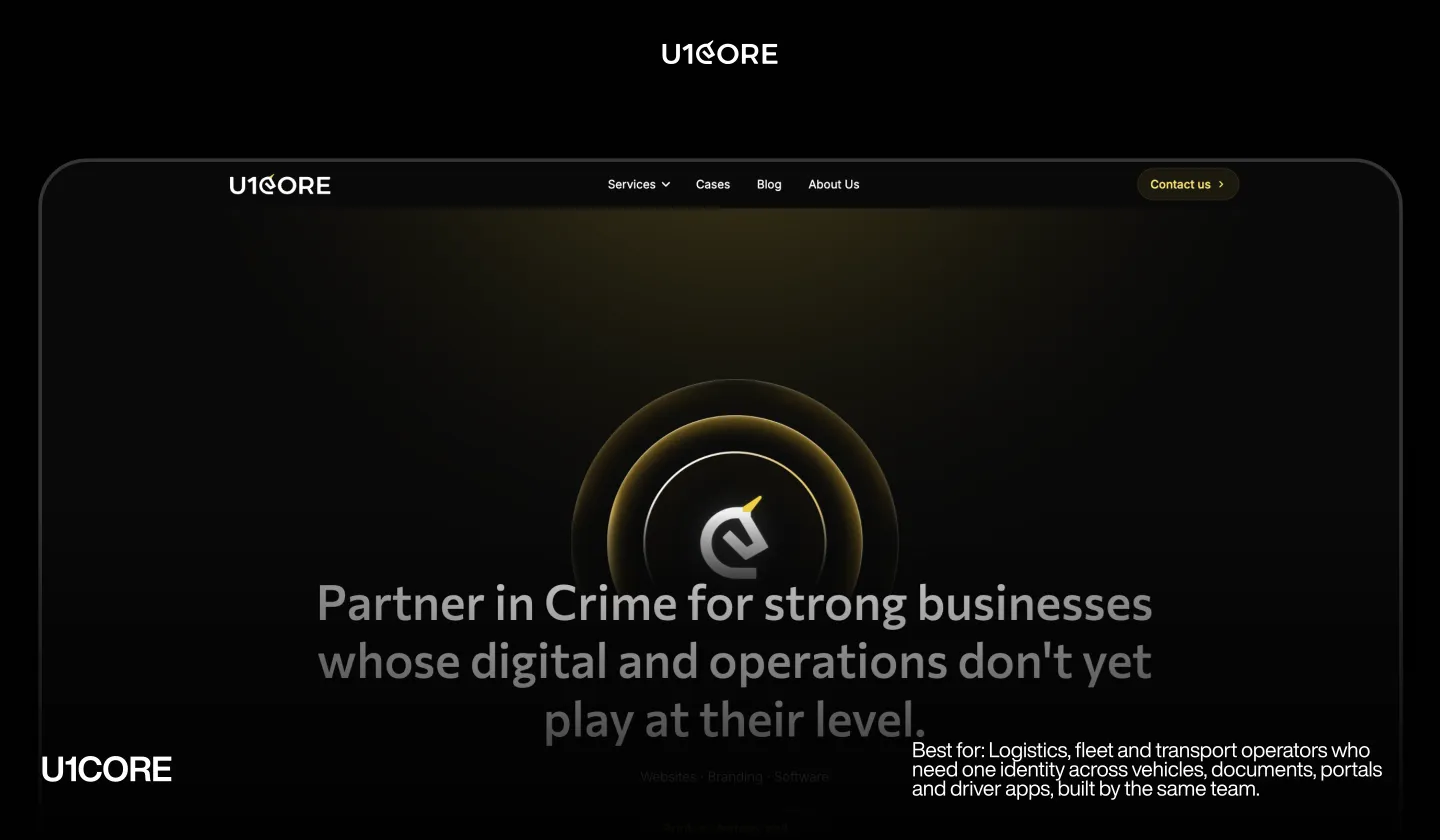
1. U1CORE
Best for: Logistics, fleet and transport operators who need one identity across vehicles, documents, portals and driver apps, built by the same team.
U1CORE is one team for branding, product strategy, UX/UI design and development, which matters in transport, where the brand lives inside software as much as on the road. We have built BridgeFleet, one web and mobile platform for payroll, documents and fleet operations across five user roles, and FluxRide, a real-time fleet management platform that replaced three disconnected tools. For Carcompany.ai, a non-emergency medical transportation company, we designed the website, logo and visual system.
What U1CORE does on logistics branding projects:
- Brand strategy and identity — positioning, logo, colour and type chosen for vehicles, documents and screens.
- Product brand layer — UI components, icon sets, status colours and map styling for portals and driver apps.
- Website design and development — a site that sells to shippers and recruits drivers.
- Platform design and build — customer portals, dispatch tools and driver apps through our Fleet Automation work.
- Document and template system — invoices, delivery notes and onboarding packs in the new identity.
Why teams choose U1CORE: The brand and the platform are designed and built by one team, so the identity holds up in the screens your customers and drivers use every day.
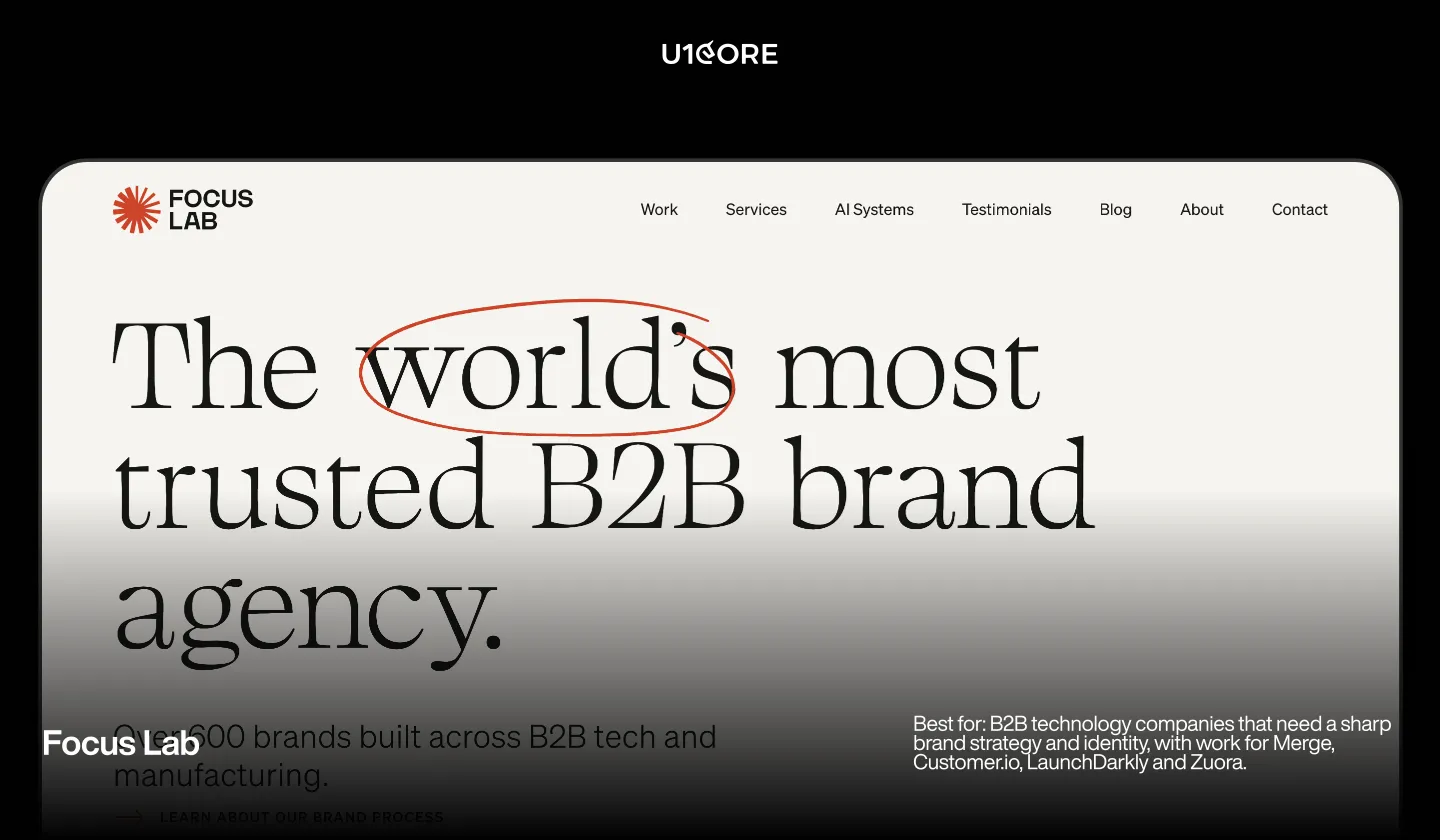
2. Focus Lab
Best for: B2B technology companies that need a sharp brand strategy and identity, with work for Merge, Customer.io, LaunchDarkly and Zuora.
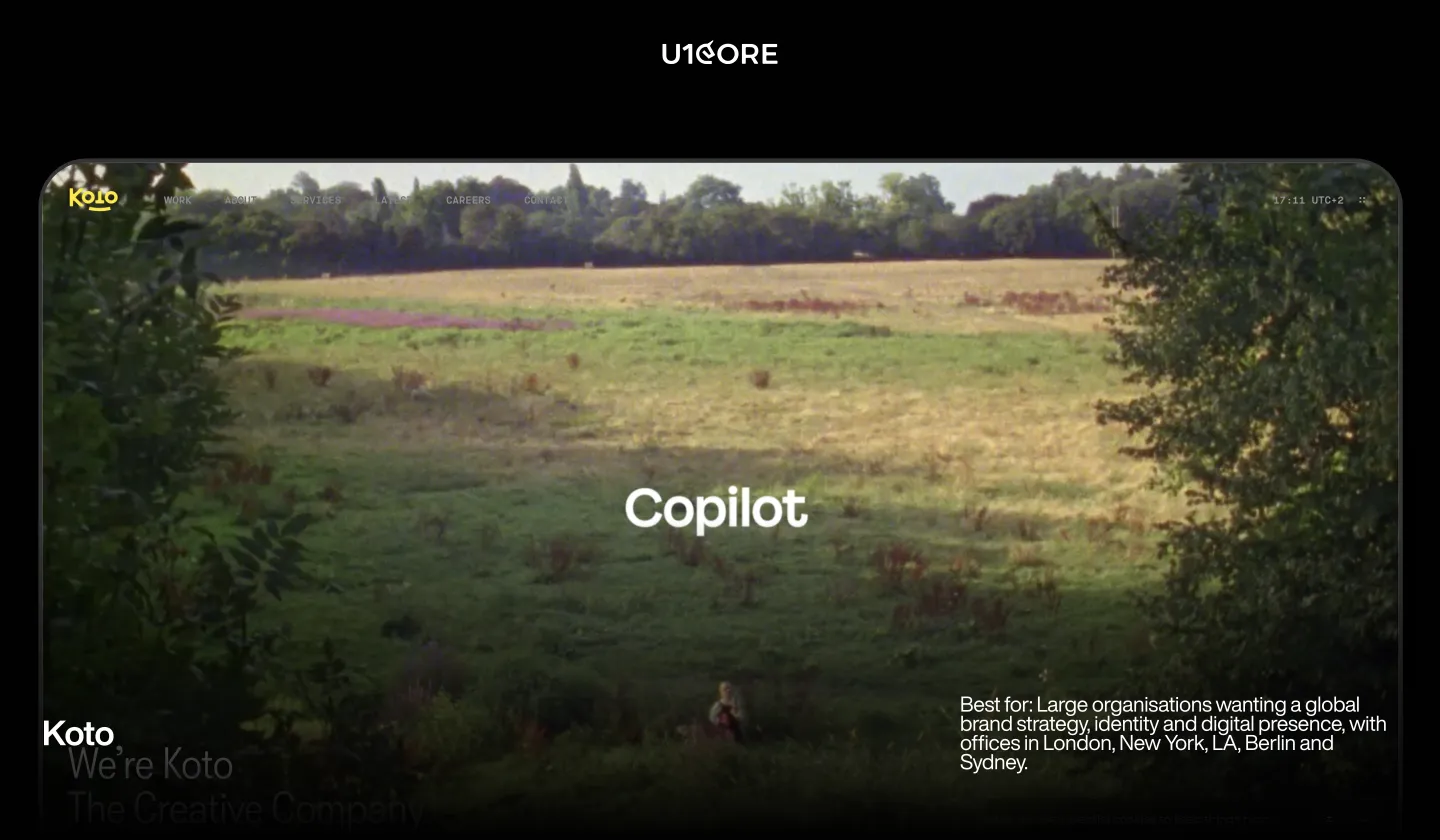
3. Koto
Best for: Large organisations wanting a global brand strategy, identity and digital presence, with offices in London, New York, LA, Berlin and Sydney.
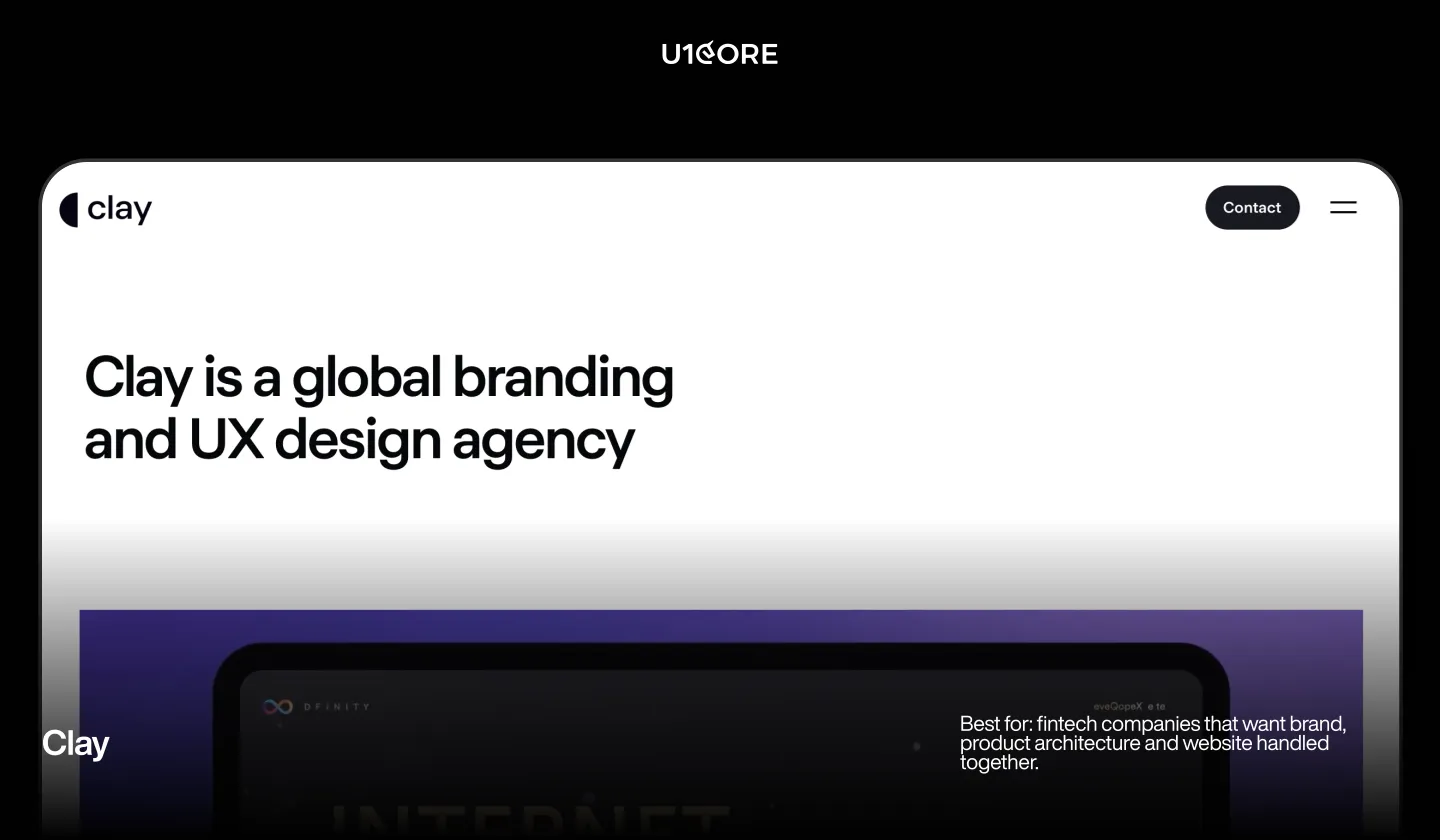
4. Clay
Best for: Enterprises that want branding, product UX, websites and development together, including enterprise UX for legacy B2B software.
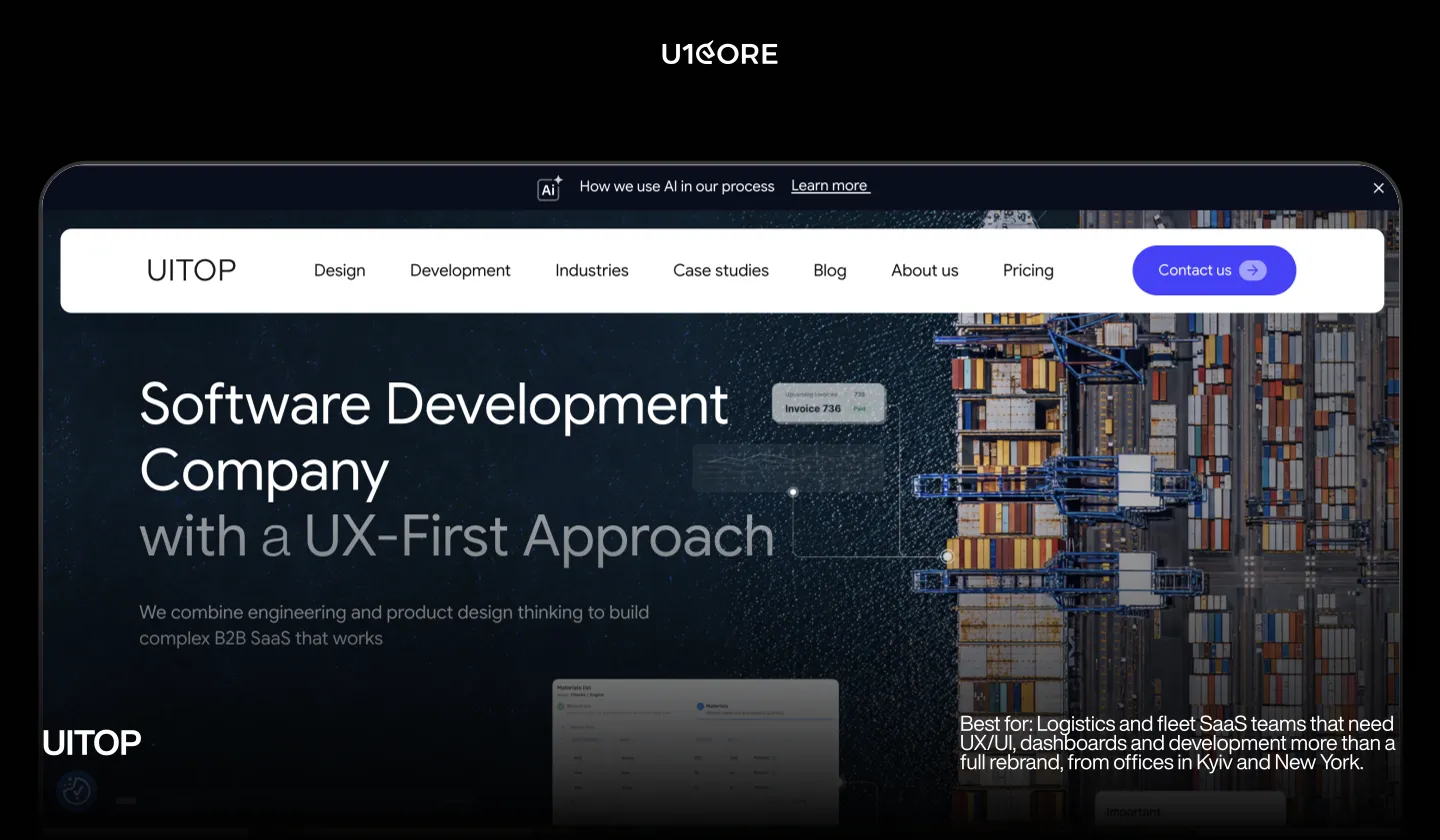
5. UITOP
Best for: Logistics and fleet SaaS teams that need UX/UI, dashboards and development more than a full rebrand, from offices in Kyiv and New York.
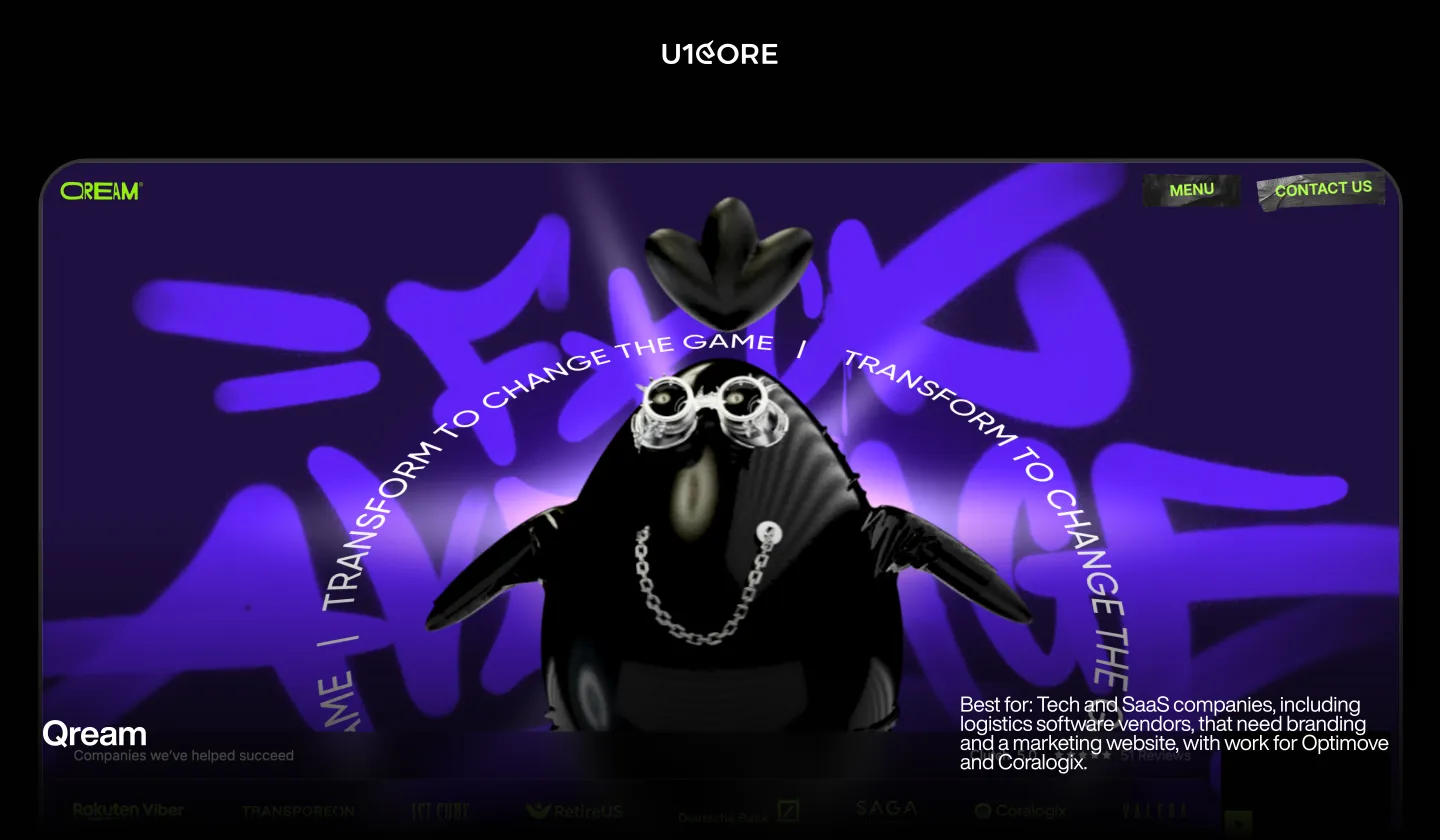
6. Qream
Best for: Tech and SaaS companies, including logistics software vendors, that need branding and a marketing website, with work for Optimove and Coralogix.
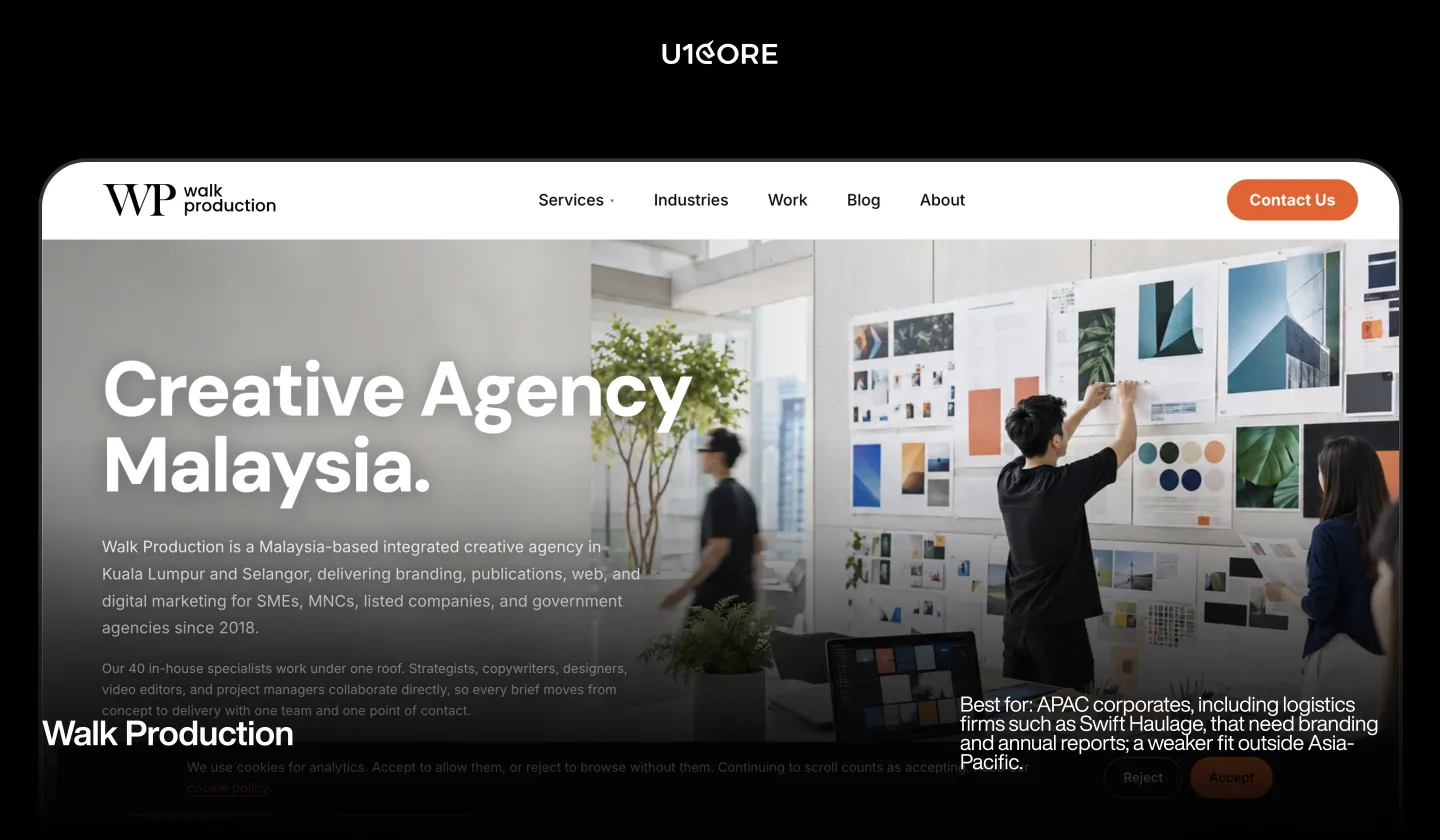
7. Walk Production
Best for: APAC corporates, including logistics firms such as Swift Haulage, that need branding and annual reports; a weaker fit outside Asia-Pacific.
Agency comparison at a glance
U1CORE — branding, UX/UI and development for fleet and transport platforms. Best fit for operators who need one identity across vehicles, documents and software.
Focus Lab — B2B tech brand strategy and identity. Best fit for software-led companies prioritising brand positioning.
Koto — global brand strategy, identity and digital. Best fit for large organisations with an international footprint.
Clay — branding, product UX, websites and development. Best fit for enterprises modernising legacy B2B software alongside the brand.
UITOP — UX/UI and development for logistics and fleet SaaS. Best fit for product-led teams focused on interfaces.
Qream — branding and marketing websites for tech and SaaS. Best fit for logistics software vendors refreshing their market presence.
Walk Production — branding and annual reports for APAC corporates. Best fit for Asia-Pacific logistics groups.
How U1CORE approaches logistics brand identity
1. Touchpoint audit (1–2 weeks). We list every place customers, drivers and partners meet the brand: vehicles, uniforms, documents, website, portal, tracking pages, driver app and notifications.
2. Strategy and positioning. Workshops with leadership, sales and operations define who the brand must convince — shippers, drivers, partners — and what it should promise each of them.
3. Identity and system design. We design the logo, colour, type and imagery, then test them in the hardest contexts first: livery at distance, app icons, status-heavy screens and printed waybills.
4. Product and document rollout. The identity becomes UI components, icon sets, website pages and document templates. Where needed, we design and build the portal or driver app in the new system.
5. Guidelines and handover. Your team receives usage rules, source files and component specs, so new routes, services and screens stay on-brand without starting over.
Does your fleet look stronger on the road than on your customers’ screens? U1CORE is the partner in crime for strong businesses whose digital and operations don’t yet play at their level. We’ll build one identity that carries from your vehicles to your portal and driver app. Book a strategy call or explore our Branding Development.