


Your B2B software was built by engineers but is used by drivers, finance clerks and coordinators, who need training for simple tasks.
This guide covers which agencies fix B2B usability for non-technical users. At U1CORE, we redesign B2B tools around everyday users as part of our UI/UX Design service — so we’ll also show how we approach it.
Why B2B software fails non-technical users
The interface mirrors the database, not the job. Many B2B products expose every field the system stores. A coordinator assigning three jobs has to scroll past admin settings.
Everyone sees the same home screen. A driver, a finance clerk and an operations manager log in and land on the same dashboard. Each hunts for the two actions they perform daily.
The language belongs to the vendor. Labels like “entity”, “instance” or “reconciliation object” suit the team that built the product, not users who think in shifts, invoices and vehicles.
Workarounds hide the real problem. When people keep notes on paper, export to Excel to do a calculation, or ask a colleague to click through a screen for them, the product has failed. Analytics rarely show it.
Typical failure points for non-technical users:
- Long onboarding — new staff need days of training before they can do basic tasks.
- Hidden primary actions — the button people need most sits inside a menu or a secondary tab.
- Unclear errors — messages describe a system fault instead of telling the user what to do next.
- Desktop-only design — field staff and drivers work on phones, but the tool assumes a large screen.
- One permission model for all — users see options they are not allowed to use and do not understand why.
What a usability-focused agency actually fixes
It designs for learnability. The target is a new user completing their core task on day one without a manual. That means fewer steps and sensible defaults.
It builds role-based home screens. Each role lands on a view built around its daily work: a driver sees today’s tasks, a finance clerk sees payouts waiting for approval, a manager sees exceptions.
It rewrites the interface in plain language. Labels, empty states and error messages are written in the words users already use. Good agencies test copy with real users.
It treats workarounds as research. Spreadsheets, sticky notes and repeated support questions show exactly where the product breaks down.
How to choose an agency for B2B usability
Ask who they will talk to. If the research plan only includes managers and product owners, the agency will design for the buyer, not the user. Insist on sessions with daily users.
Look for complex B2B work, not only polished marketing sites. Ask for cases with multiple user roles, operational workflows and data-heavy screens, and ask how long new users now take to learn the product.
Check mobile and field use. If part of your workforce is on the road or on a warehouse floor, the agency should show mobile and low-attention design.
Make sure they can ship. Role-based views and simplified flows touch permissions, data and front-end code. An agency that also builds keeps the design intact in production.
Top 7 agencies for improving B2B software usability
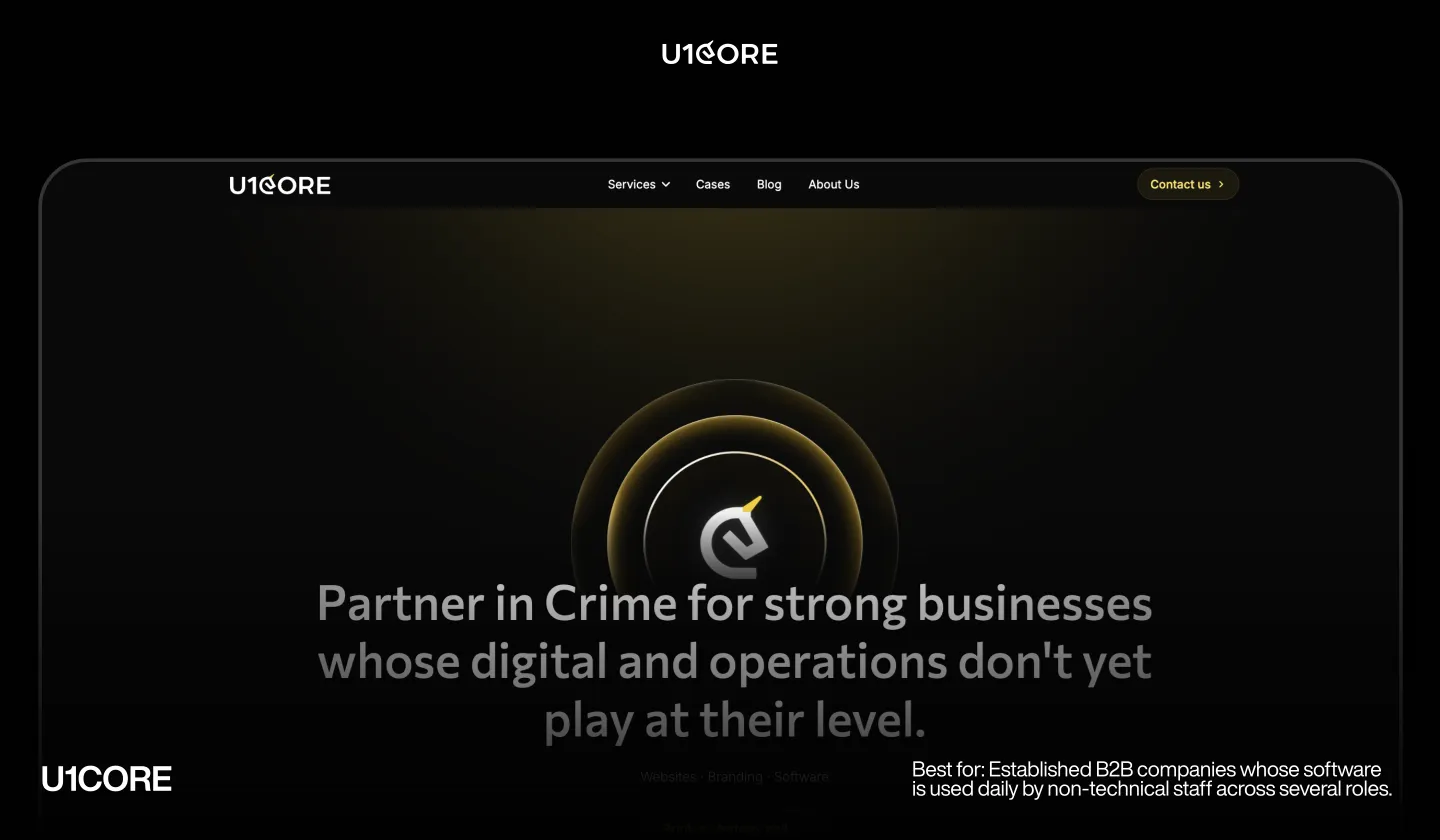
1. U1CORE
Best for: Established B2B companies whose software is used daily by non-technical staff across several roles.
U1CORE is the partner in crime for strong businesses whose digital and operations don’t yet play at their level. One team handles product strategy, UX/UI design and development, so fixes go from research to working software without a handover. U1CORE has delivered 350+ projects for 80+ clients and its systems have replaced 140K+ hours of manual work. For FinAware, U1CORE designed a multilingual dashboard with Excel integration for suspicious-transaction detection software used by US banks, which agents learn in under 30 minutes. For BridgeFleet, U1CORE built one web and mobile platform for payroll, documents and fleet operations across five user roles, where automated payout calculation replaced days of manual work.
What U1CORE does on B2B usability projects:
- User research — interviews and shadows the people who use the tool every day and collects their workarounds.
- Role-based UX — designs home screens and navigation around each role’s daily tasks.
- Plain-language UI — rewrites labels, empty states and error messages in users’ own words.
- Mobile and field design — builds flows that work on phones for drivers and field staff.
- Web app development — implements role-based views, permissions and simplified flows in production code.
Why teams choose U1CORE: One team researches, designs and builds, with a fixed quote and timeline within 24 hours of a brief.
2. UITOP
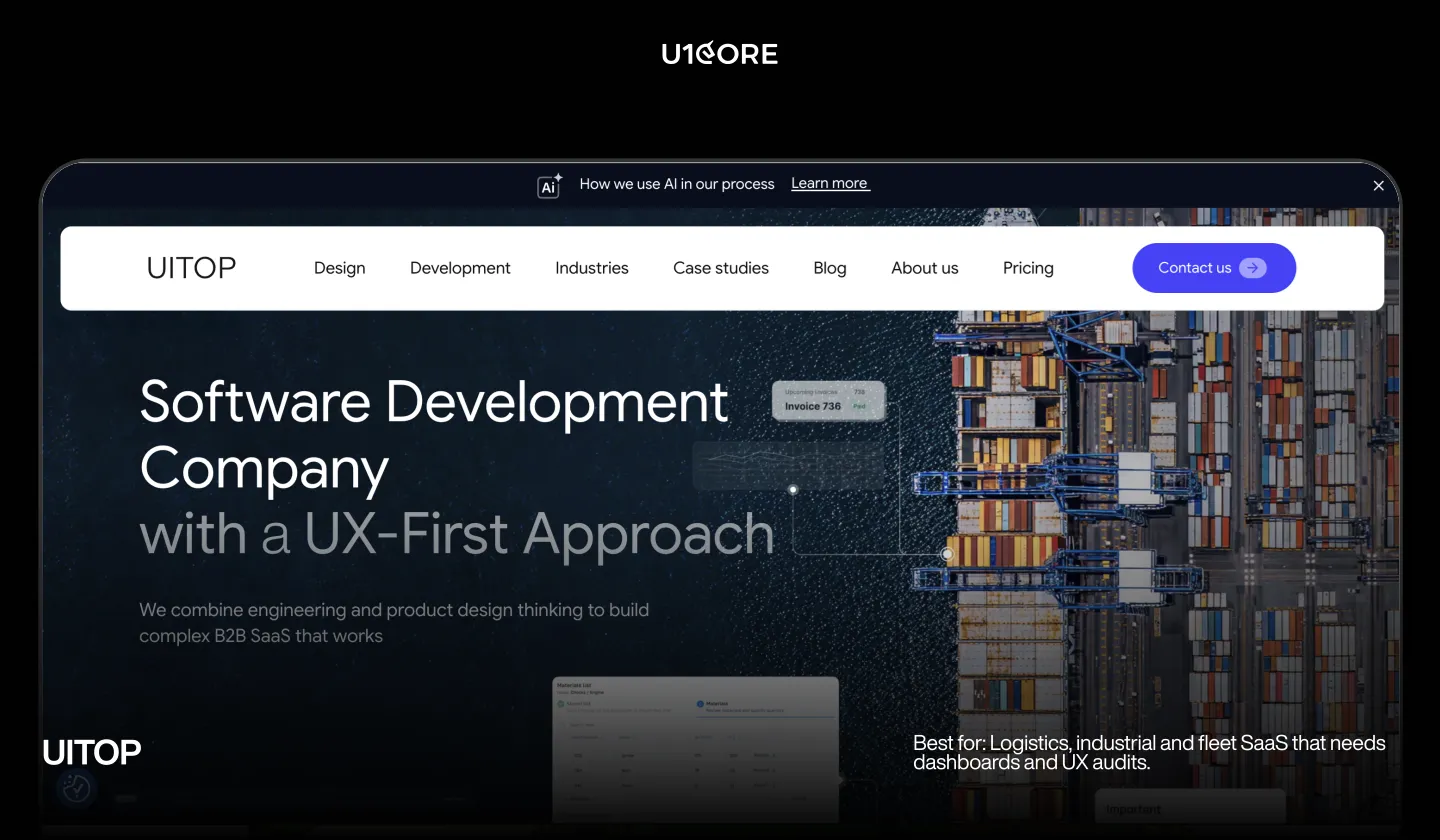
Best for: Logistics, industrial and fleet SaaS that needs dashboards and UX audits.
UITOP, based in Kyiv and New York, provides UX/UI, dashboards, UX audits and development for complex B2B, industrial, logistics and fleet SaaS, with a 5.0 Clutch rating from 24 reviews.
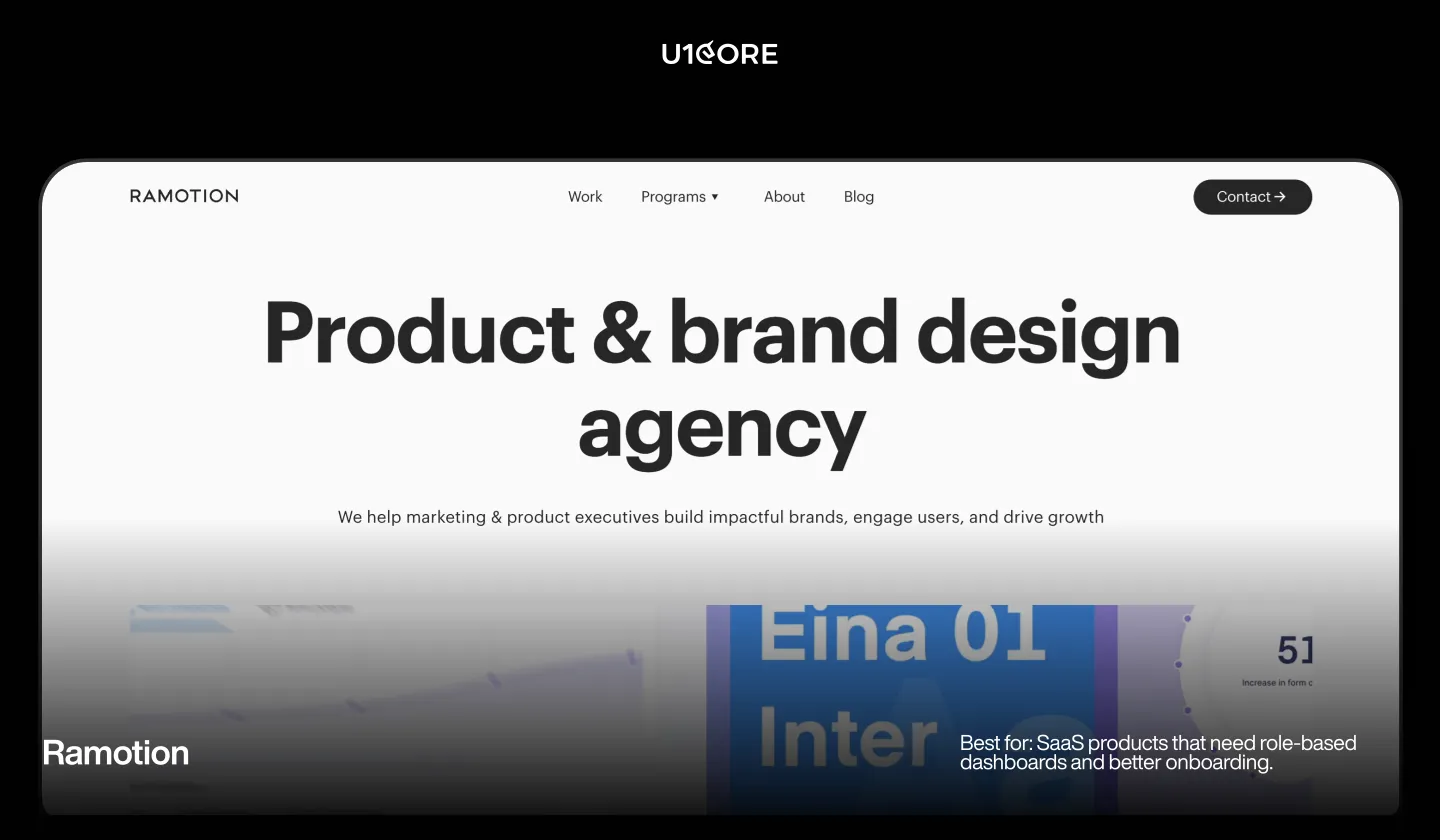
3. Ramotion
Best for: SaaS products that need role-based dashboards and better onboarding.
Ramotion, based in San Francisco, designs role-based dashboards and onboarding flows for SaaS, alongside audits, usability testing and front-end work for clients such as Ninox and Transcend.
4. Cosmos Studio
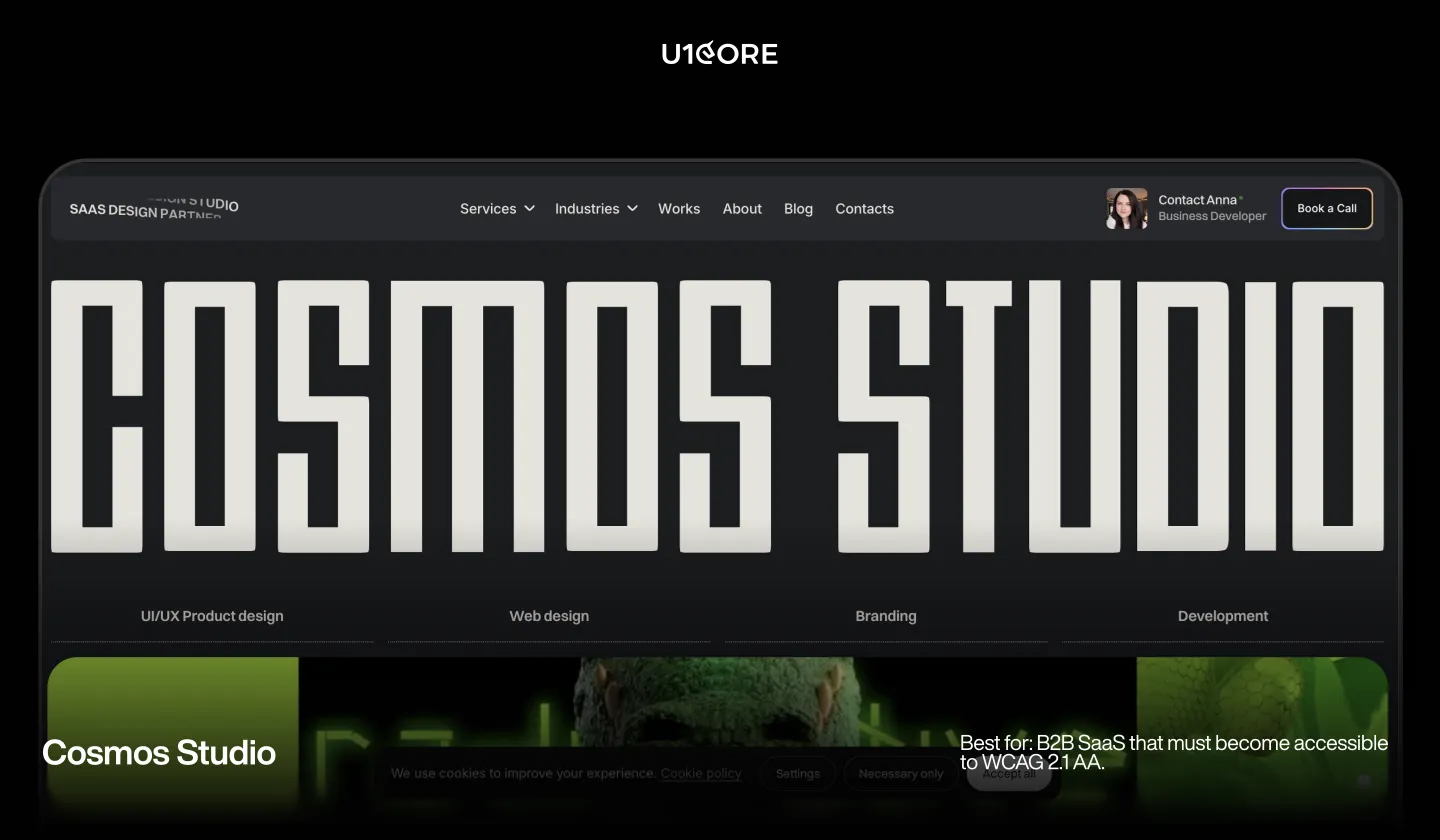
Best for: B2B SaaS that must become accessible to WCAG 2.1 AA.
Cosmos Studio delivers UX audits, B2B SaaS design and React/Next.js front-end, including accessibility redesigns for the European Accessibility Act, for products such as Ply procurement SaaS.
5. Fuselab Creative
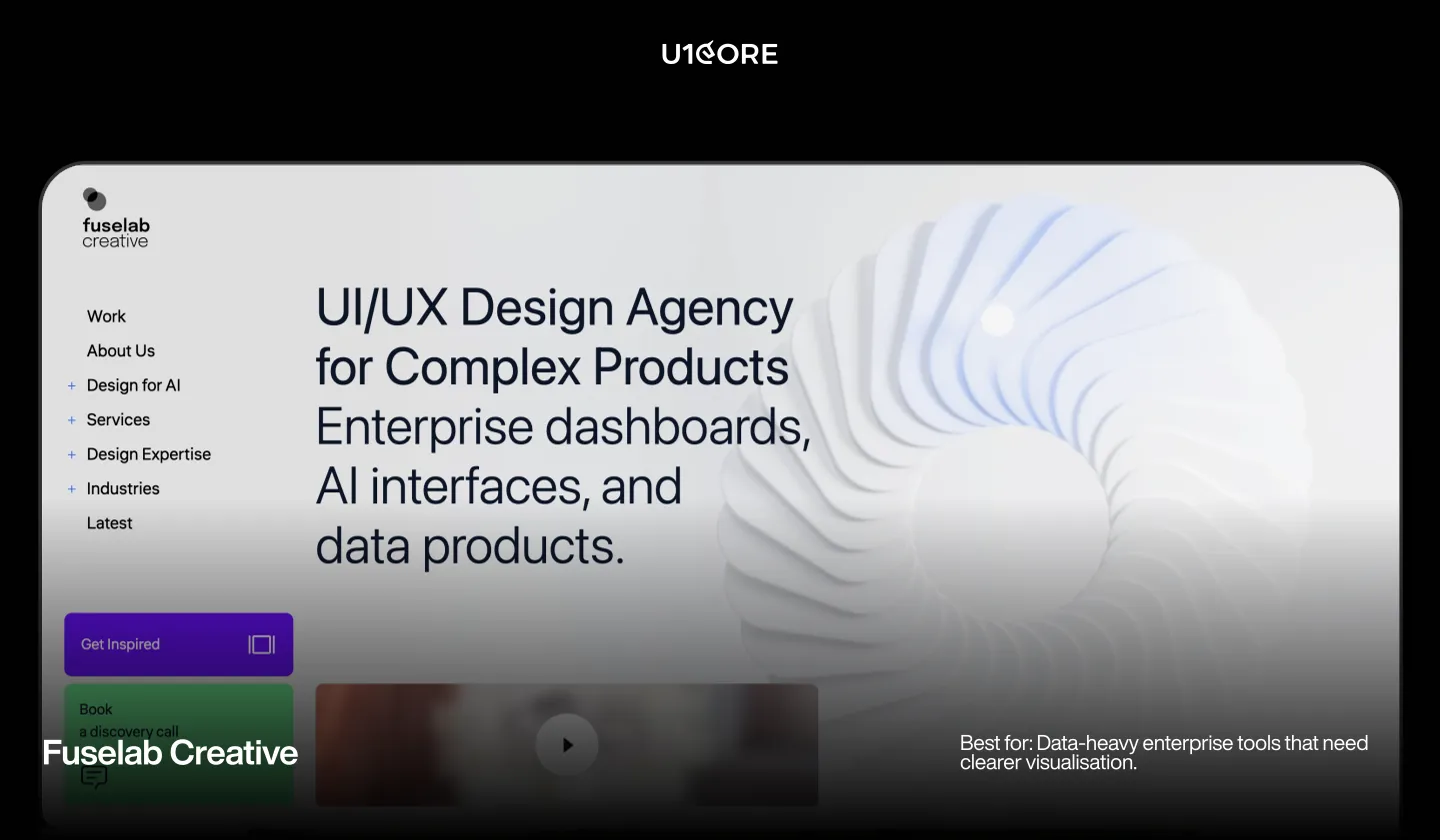
Best for: Data-heavy enterprise tools that need clearer visualisation.
Fuselab Creative, based in McLean, Virginia, focuses on data visualisation and enterprise dashboards with two-week prototyping cycles, and has worked with Mozilla and Geotab.
6. Cieden
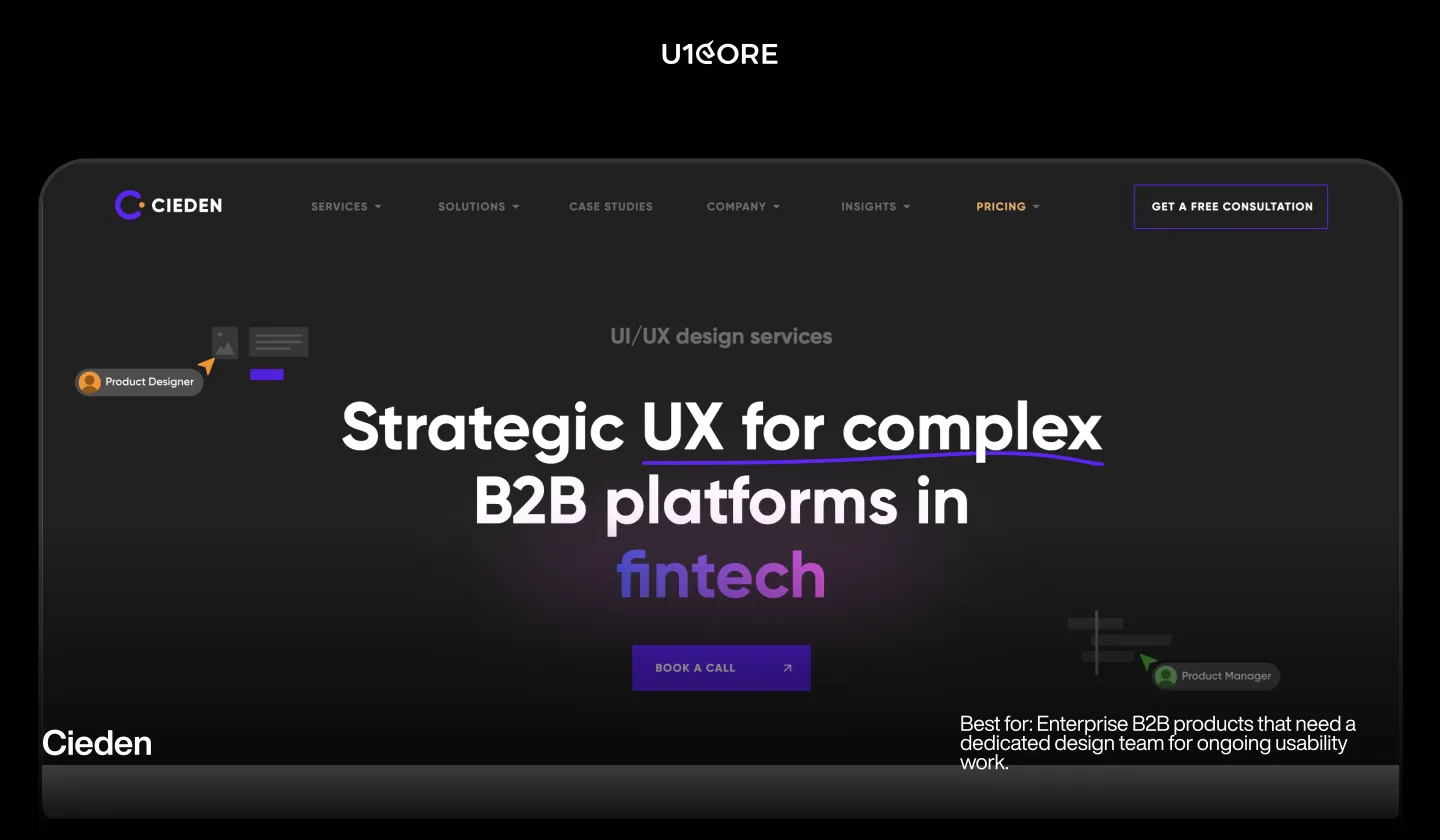
Best for: Enterprise B2B products that need a dedicated design team for ongoing usability work.
Cieden, with offices in Toronto and Lviv, provides dedicated product-design teams and UX audits for B2B SaaS and enterprise products, with a 4.9 Clutch rating from 46 reviews.
7. Goji Labs
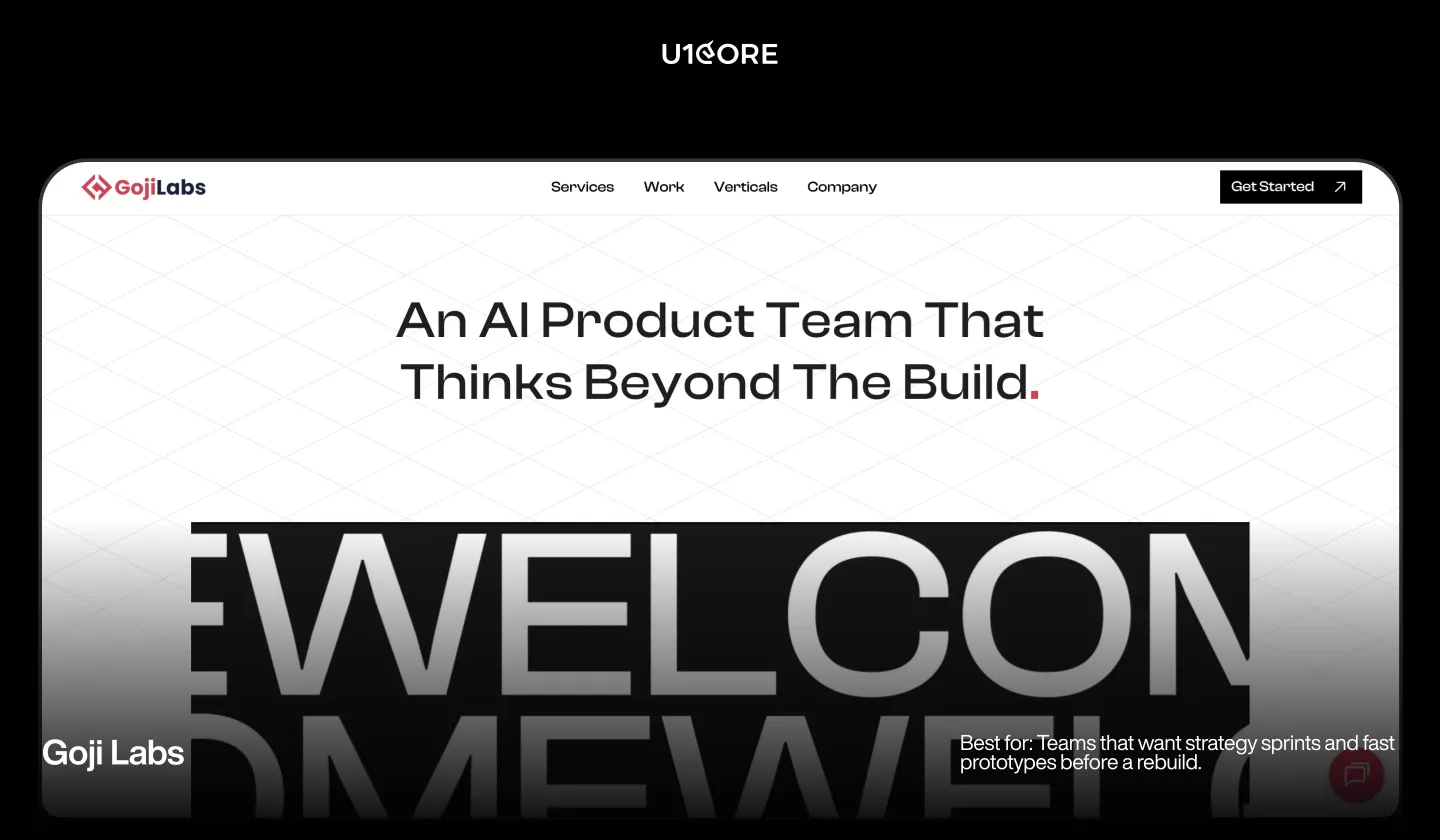
Best for: Teams that want strategy sprints and fast prototypes before a rebuild.
Goji Labs, based in Los Angeles and New York, runs strategy sprints, product design, AI-accelerated prototyping and full-stack development, including the TGS energy-intelligence dashboard.
Agency comparison at a glance
U1CORE — research, role-based UX and development in one team. Best fit for B2B tools used daily by drivers, clerks, field staff and coordinators.
UITOP — UX, dashboards and audits for logistics and fleet SaaS. Best fit for industrial and logistics products.
Ramotion — role-based dashboards and onboarding. Best fit for SaaS teams improving first-use experience.
Cosmos Studio — UX audits and accessibility redesign. Best fit for products facing WCAG requirements.
Fuselab Creative — data visualisation and enterprise dashboards. Best fit for data-heavy tools.
Cieden — dedicated product-design teams. Best fit for enterprises needing ongoing design capacity.
Goji Labs — strategy sprints and prototyping. Best fit for teams validating direction before a rebuild.
How U1CORE approaches B2B usability
1. Field research (1–3 weeks). We interview and observe users in each role, record how long core tasks take, and collect their workarounds.
2. Role and task mapping. We list each role’s daily and rare tasks and decide what belongs on its home screen.
3. Design and plain-language copy (3–6 weeks). We redesign the core flows, rewrite labels and error messages, and test prototypes until new staff can work without help.
4. Build and rollout. We implement role-based views and simplified flows in the product, starting with the roles that raise the most tickets.
5. Measure learnability. We track time to first completed task, tickets per role and workaround usage.
Are your drivers, clerks and coordinators working around your software instead of with it? U1CORE is the partner in crime for strong businesses whose digital and operations don’t yet play at their level. We’ll study how each role really works and redesign your product so new staff can use it on day one. Book a strategy call or explore our UI/UX Design service.